
Close
Close
Enter your shipment number.
Close

Market Report - 2/2026
These informative and comprehensive documents highlight critical supply chain news and events, with information sourced from the industry’s leading sources.
OIA Global produces a comprehensive market report each month!
Content Sections
- Market Trends
- Mergers & Acquisitions
- Infrastructure
- Laws & Legislation
- Sustainability
- Transport Technology
Market Trends





Exports from Latin America have surged over the past 12 months, with Brazil, Argentina, Mexico, Chile, and Peru all showing a record number of overseas shipments.
Source: Brazil’s Ministry of Development, Industry and Trade; Banco de México; Central Bank of Chile; Argentina’s National Institute of Statistics and Censuses; Peru’s National Superintendency of Customs and Tax Administration, via Bloomberg.
Note: Data for Mexico are year-to-date through November; data for Peru are year-to-date (YTD) through October.


India’s Container Trade Rises Sharply in 2025
India’s 2025 Container Port Volume with Provisional Numbers in TEUs. Approximately 60% of India’s containerized freight is shipped in and out of Mundra Port (Gujarat) and Nhava Sheva Port (Mumbai).
“Capacity expansion, particularly in western and southern India, combined with modernization initiatives across major ports, has delivered tangible productivity gains, positioning us well to support the country’s ambitious growth trajectory. We are seeing faster turnaround times, enhanced operational efficiency, and infrastructure that can genuinely compete globally.”
– Bhavik Mota, Maersk’s Director of Regional Ocean Management for India, Middle East and Africa
Source: JOC market research, S&P Global.

Market Trends (Continued)
Global Aircraft Backlog
The backlog is at a record high, equaling 11x the number of deliveries.
Source: IATA Sustainability & Economics, Cirium Fleets Analyzer, via Air Cargo News.

Cargo Fleet Size Change (By Event Type)


Carriers Remain Cautious Toward Suez Canal Return
A Gaza ceasefire in Oct. ‘25 raised hopes for normalized traffic through the Suez Canal, but renewed Houthi threats and a regional military buildup by the U.S. casts doubt on whether the shipping route can maintain any stability.
- Amidst heightened geopolitical tensions, Houthi forces recently declared solidarity with Iran while the U.S. is actively increasing its military presence throughout the region, both land and sea.
- CMA CGM, which has been gradually resuming service through the Suez Canal, recently pulled back its efforts and re-routed its ships.

Riyadh Air, which is backed by the Saudi Public Investment Fund (PIF), plans to connect Riyadh with 100+ new destinations by 2030. The airline’s cargo operations currently use belly capacity from its passenger fleet, but the airline has many widebody aircraft on order.
There has been a shift to mid-sized vessel orders as leading carriers prioritize adaptability in their orderbooks:
“Interest in orders has been in the mid-large, from around 10,000 TEU to 16,000 TEU, and not just 24,000 TEU ships—to me that’s testament to the fact that carriers are also thinking about making more complex supply chains, not only getting into China and not only bringing [cargo] into main ports in Europe but using smaller ports than they used a decade ago”
– Peter Sand, Xeneta Chief Analyst


Nigeria started to disburse the cabotage vessel financing fund (CVFF), a scheme created over two decades ago to boost domestic ship-ownership. With a digital portal now launched, qualified applicants could access up to $25m with an eight-year loan tenure and an interest rate of 6.5%.
Mergers & Acquisitions
The U.S. Surface Transportation Board (STB) rejected the 7,000-page merger application from Union Pacific (UP) and Norfolk Southern (NS), calling it incomplete. STB claims that the two companies omitted post-merger market share projections, as well as other documents required by law. UP and NS are expected to re-file their proposal before the next STB deadline.
Rival railways BNSF and Canadian National (CN) both reiterated this sentiment:
“UP and NS are blocking efforts to see what they actually believe and discuss internally: whether the merger will hurt competition by reducing service or leading to higher rates for shippers; whether the executive teams actually believe the merger will enhance competition; where the integration could go awry and cause disruptions; and whether the purported benefits are achievable at all, or alternatively, achievable absent a merger”
– Burlington Northern Santa Fe (BNSF) Railway in a recent press statement

- Allegiant Air acquired Sun Country Airlines, the freight operator for Amazon. Each airline will operate separately until they obtain a single operating certificate from the Federal Aviation Administration (FAA).
- FedEx is two steps closer to creating a separate FedEx Freight division after filing papers with the U.S. Securities & Exchange Commission (SEC) and naming its board of directors. When the new company launches on June 1st, it will instantly become the country’s largest less-than-truckload (LTL) carrier.
Infrastructure

Canada’s Port Saint John in New Brunswick—adjacent to Maine in the U.S.—completed its four-year $178m West Side Modernization Project on the hub’s Atlantic seaboard. Upgrades include new equipment and systems that will quadruple container terminal capacity from 150,000 twenty-foot equivalent units (TEUs) to 1m TEUs annually.
The first phase of the Mato Gross State Railway (FMT) project throughout the central Brazilian state is expected to be completed during the second half of this year. The FMT project intends to build 743km of new rail line, connecting five different regions in the process.
Two new 50-gauge ship-to-shore (STS) container cranes have entered service at the Jacksonville Port Authority’s (JAXPORT) Blount Island Marine Terminal.
Ongoing Projects at the Port of Los Angeles
- Development of a 40-acre site adjacent to Pier 300
- Upgrade the LA Til container terminal in the port’s West Basin
- Develop 80+ acres of under-utilized land on Terminal Island to create a maritime support facility for chassis parking and maintenance, as well as container pickups and drop-offs.
- Re-decking the Vincent Thomas Bridge at the port’s entryway
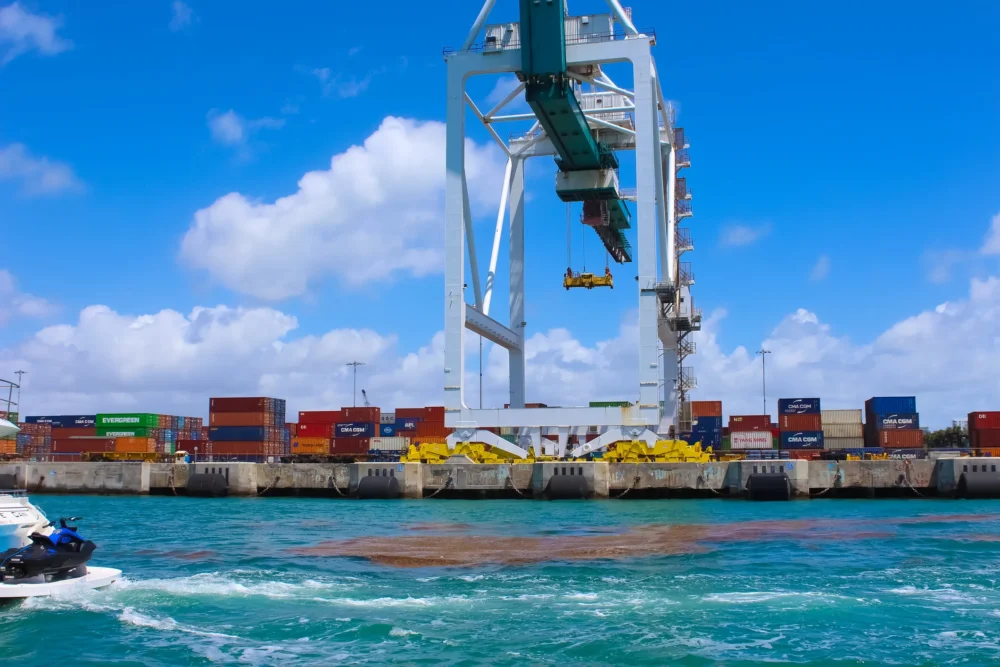
Key Projects in Africa This Year

The Misurata Free Zone (MFZ)—Libya’s main container gateway handling >60% of the country’s trade—will receive $2.7b to gradually increase the port’s capacity to 4m TEUs per year.

Algeria’s Béchar – Gâra Djebilet iron ore railway, which will connect industrial production and key ports via 950km of heavy-haul track.

Gabon’s 648km mainline rail upgrade will repair unstable sections between Ndjolé and Franceville, increasing capacity overall.
Laws & Legislation

EU & India Conclude Landmark Free Trade Agreement


The United Kingdom and Indonesia signed a new Economic Growth Partnership (EGP) to boost bilateral trade, which builds on the £4b (USD $5.2b) Maritime Partnership Programme signed in Nov. ‘25.
A new version of the Defending American Property Abroad Act would empower the U.S. president to designate any port, harbor, or marine terminal in a Western Hemisphere country as “prohibited” if a foreign trade partner has nationalized or expropriated property owned by a U.S. citizen or corporation. The port or terminal must also be accessible via land owned, held, or controlled by a U.S. citizen or corporation.
Laws & Legislation (Continued)



In a move to strengthen domestic production capabilities, Mexico’s government introduced tariffs ranging from 10%-50% on 1,000+ products from China, South Korea, India, Vietnam, Thailand, Brazil, Indonesia, Taiwan, Nicaragua, the United Arab Emirates (UAE), and South Africa.
The Trump Administration and U.S. Federal Maritime Commission (FMC) are working to close a decades-old tax loophole that allowed cargo routed through Canadian and Mexican ports to avoid U.S. Harbor Maintenance Tax (HMT) fees.
Trucking carriers and their insurers are facing heightened risk due to the surge of “nuclear verdicts,” when a jury awards over $10m in damages. In accidents involving commercial trucks and passenger vehicles, carriers often bear the burden even when they are not at fault.
- For an industry already operating on thin margins, nuclear verdicts, litigation abuse, higher insurance premiums, and operational challenges are all creating a financial pressure cooker.
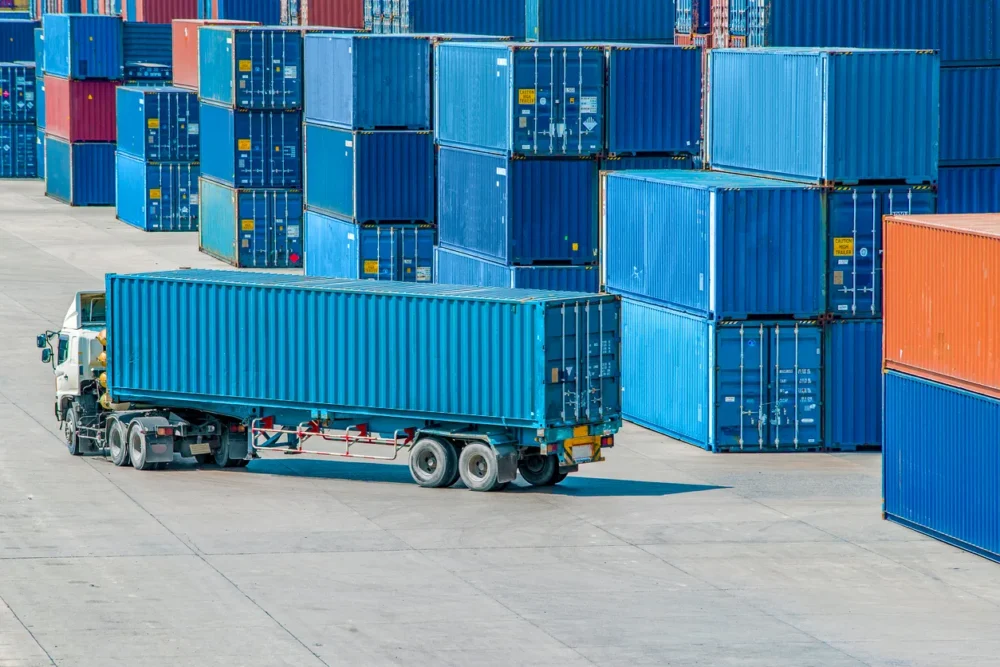
Both large and small shippers can bid for direct access to the U.S Postal Service’s (USPS) same-day or next-day delivery infrastructure starting in early 2026. Winners will gain access to 18,000+ delivery destination units (DDUs), which are the last stop in the USPS network before packages reach their final address.
Non-Domiciled Commercial Driver’s Licenses
- The U.S. Postal Service (USPS) will phase out non-domiciled Commercial Drivers’ Licenses (CDL) drivers, forcing contracted trucking providers to comply with stricter driver verification. The goal is to safeguard the American public from trucking-related safety incidents.
- The Federal Motor Carrier Safety Administration (FMCSA) continues to crack down on states that have been issuing CDLs improperly as part of a nationwide audit of the states’ truck licensing systems.
Trade groups have warned that new limits on non-domiciled CDLs could sideline thousands of legally authorized drivers and strain freight capacity.

Sustainability
Sustainability
Maersk, the world’s second-largest container shipping line, is hoping to boost usage of ethanol as a green fuel to reduce dependence on China and diversify supplies.
“In general, it is a concern if there is only one country that can produce the energy of the future. Today, it looks like China is by far the most competitive producer of green methanol. Not all our ships go to China; not all our ships can depend on energy from China.”
– Vincent Clerc, CEO of Maersk
Transport Technology
Transport Technology
Garmin introduced the Dēzl DualView, a two-camera system designed to improve driver visibility along both sides of a commercial truck. The system provides a continuous live view in the cab and automatically records video during detected incidents.