Nhập số lô hàng của bạn.

Cập nhật biểu thuế
Rates, country designations, and trade rules are all subject to change.
8 September 2026
Recent Developments

U.S. & Canada Engage in Escalating Trade War
Following a 3-day extension of negotiations, the Trump Administration decided to target Canadian products in several ways:
- Additional 50% tariff on certain Canadian goods
- Does not stack with Section 232 tariffs
- Does not apply to goods claiming chapter 98 duty-free treatment (except for the value of repairs, alterations, assembly)
- No exclusion for goods covered under the US-Mexico-Canada (USMCA) agreement
- Goods going into Foreign Trade Zones (FTZ) must be admitted as “privileged foreign status”
Canadian Countermeasures
Canada retaliated with counter-tariffs ranging from 15% to 50%, which took effect 12:01 a.m., September 8th, 2026.
- Goods in transit on September 8th are exempt; remission remains available
- 25% auto counter-tariffs remain
- Tiered 15%, 25%, and 50% surtaxes across 600+ items: steel, aluminum, dairy, appliances, ag equipment, pulp and paper, electronics, furniture and apparel.
The U.S. released additional proclamations hours after Canada’s counter-tariffs took effect—two of them modify the scope of the 50% tariff lists. Outright import bans on certain Canadian goods are scheduled for Sept. 29th via Section 338.
U.S. Customs Updates Post Summary Corrections (PSC) Procedures
Effective Aug. 5th, 2026
Post Summary Correction (PSC) procedures can affect duty corrections, valuation updates, classification changes, and compliance workflows. This is important for customs brokers and importers because PSCs are the primary mechanism for correcting entry summaries after filing but before liquidation.
- Updated eligibility rules for when a PSC can be filed.
- Changes to how PSCs interact with protests, liquidations, and other post-entry actions.
- Expanded validation and automation within ACE.
- New processing logic intended to improve accuracy and reduce conflicting post-entry filings.

Section 301: Forced Labor Tariffs
July 23rd, 2026
The United States Trade Representative (USTR) will enact a 10-12.5% ad valorem duty rate on 60 countries for their failure to stop goods from being produced and/or shipped using forced labor. A country-by-country list can be found here.
- The new levies counter the expiration of a temporary 10% global tariff under Section 122, which was installed after the Supreme Court rejected duties previously imposed under the International Emergency Economic Powers Act (IEEPA).
- For countries with Most-Favored Nation (MFN) rates, such as the EU, Japan and South Korea, the tariff charged will be net of the MFN duty.

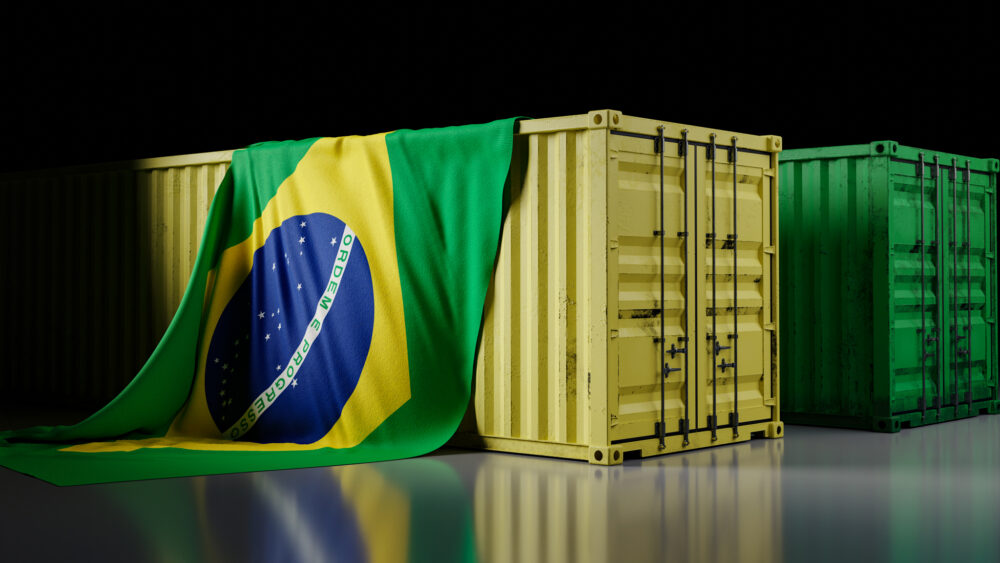
Section 301: Brazilian Goods
July 22nd, 2026
Following a yearlong Section 301 investigation by the Office of the U.S. Trade Representative (USTR), the U.S. imposed a new 25% tariff on most Brazilian imports, citing unfair digital trade and environmental policies.
- Key exemptions: beef, coffee, crude oil, orange juice, and civil aircraft parts. Roughly half of all Brazilian goods are exempt from the 25% levy to prevent major supply chain shocks.
- Key inclusions: ethanol, sugar, machinery, and footwear.
Brazil responded by requesting World Trade Organization (WTO) consultations and signing a credit line for affected firms.
Aug. 13th, 2026
A U.S. trade court rejected a challenge to President Donald Trump’s suspension of the de minimis exemption for low-value parcels, solidifying the law long-term.
Aug. 4th, 2026
So far the Trump Administration has paid out roughly 60% ($100b / $165b) of the money collected from the president’s “liberation day” tariffs.
July 23rd, 2026
The United States Trade Representative (USTR) enacted a 10-12.5% ad valorem duty rate on 60 countries for their failure to stop goods from being produced and/or shipped using forced labor. A country-by-country list can be found here.
- This action compensates for the administration’s 10% global tariff, invoked under Section 122 of the Trade Act of 1974, which was set to expire July 24th. These Section 122 tariffs were enacted following the Supreme Court’s invalidation of IEEPA tariffs.
July 7th, 2026
U.S. CBP officially launched CAPE Phase 2, expanding refund eligibility to include certain reconciliation-flagged entries. Importers with eligible entries that were previously excluded should review their records, as additional refunds may now be available. There is still no mechanism for entries that have already liquidated and are beyond the 80-day Phase 1 filing deadline.
June 1st, 2026
The U.S. made temporary adjustments to Section 232 tariffs on steel, aluminum and copper imports, targeting specific types of agricultural and industrial goods. The changes will stay in effect until Dec. 31st, 2027.
- Agricultural equipment (combines, harvesters, etc.) reduced to 15% tariff rate (previously 25%)
- Aluminum lithographic plates and steel racks added to the list of derivative products that qualify for the 25% tariff rate. ,
International Emergency Economic Powers Act (IEEPA)
Aug. 4th, 2026
So far the Trump Administration has paid out roughly 60% ($100b / $165b) of the money collected from the president’s “liberation day” tariffs.
IEEPA Tariff Refunds: ACH Support Available
Importers must ensure their ACH refund accounts are properly configured with CBP. If you have not yet established or confirmed your ACH refund setup, we strongly recommend doing so. Filing a protest:
- Bảo toàn quyền được hoàn tiền của bạn
- Bảo vệ bạn nếu CBP yêu cầu khiếu nại như một phần của quy trình hoàn tiền.
- Đảm bảo yêu cầu bồi thường của bạn vẫn còn hiệu lực trong suốt quá trình tố tụng.
Việc không nộp đơn khiếu nại trong vòng 180 ngày kể từ ngày thanh lý có thể khiến bạn mất khả năng thu hồi bất kỳ khoản thuế nào đã nộp. Tìm hiểu thêm về quy trình thanh lý tại đây .
OIA Global có thể giúp ích theo nhiều cách:
- Xem lại dữ liệu nhập liệu của bạn để xác định các lô hàng đủ điều kiện thuộc diện ảnh hưởng của IEEPA.
- Theo dõi ngày thanh lý để đảm bảo đáp ứng đúng thời hạn.
- Chuẩn bị và nộp đơn khiếu nại thay mặt bạn
- Gửi khiếu nại theo đợt để nâng cao hiệu quả.
- Hãy phối hợp với cố vấn pháp lý của bạn (nếu có).
Consolidated Administration & Processing of Entries (CAPE) System
CAPE Phase 2
July 7th, 2026: CBP officially launched Phase 2 of the CAPE rollout, expanding refund eligibility to include certain reconciliation-flagged entries. Importers with eligible entries that were previously excluded should review their records, as additional refunds may now be available. There is still no mechanism for entries that have already liquidated and are beyond the 80-day Phase 1 filing deadline.
CAPE Phase 1
April 20th, 2026: Phase 1 of the Consolidated Administration & Processing of Entries (CAPE) system went live via U.S. Customs & Border Protection’s (CBP) ACE Portal. Although still limited in scope, CAPE does allow importers to reclaim IEEPA duties and interest. Importers should continue to monitor entry liquidation statuses, as the liquidation date is the deciding factor for use of the CAPE system.
Mục 232 Thuế quan
Section 232 Metals
Key Changes (Effective April 6th, 2026, 12:01 a.m. ET)
Tariffs will now be assessed based on the full value of imported goods—not reduced foreign pricing.
- 50% tariff: Articles made entirely or almost entirely of steel, aluminum, or copper (e.g., coils, sheets).
- 25% tariff: Derivative products substantially made of these metals.
- 15% tariff (through 2027): Certain metal-intensive industrial and electrical grid equipment to support U.S. industrial expansion.
- 10% tariff: Products manufactured abroad using entirely U.S.-origin metals.
Exemption: Goods containing 15% or less of these metals are no longer subject to Section 232 tariffs.
June 1, 2026: The U.S. made temporary adjustments to Section 232 tariffs on steel, aluminum, and copper imports, targeting specific types of agricultural and industrial goods.
- Agricultural equipment (combines, harvesters, etc.) reduced to 15% tariff rate (previously 25%)
- Aluminum lithographic plates and steel racks have been added to the list of derivative products that qualify for the 25% tariff rate.
The changes will stay in effect until Dec. 31st, 2027.
Implementation Guidance
Implementation guidance related to the June 1st, 2026 Presidential Proclamation further adjusting Section 232 tariffs on aluminum, steel, copper, and derivative products. Importers should review affected products, evaluate eligibility under the new provisions, and ensure documentation supporting country-of-origin, melt-and-pour, and smelt-and-cast requirements remains current.
Additional Products Added
Effective June 8th, 2026, several new HTS classifications were added to the scope of Section 232 duties, including certain lithographic printing plates and metal furniture products.
85% U.S.-Metal Content Threshold
CBP reduced the qualification threshold for products seeking preferential treatment based on U.S.-origin metal content. Beginning June 8, products must contain at least 85% U.S.-origin aluminum, steel, or copper, rather than the previous 95% threshold.
New HTSUS Provisions
New HTSUS Provisions (9903.82.20–9903.82.26): CBP introduced new tariff provisions covering certain derivative steel products, agricultural equipment parts, fixed industrial equipment, and mobile industrial equipment. These provisions establish revised duty treatments and reporting requirements for qualifying imports.
USMCA Steel Derivative Treatment
Certain steel derivative products from Canada and Mexico that qualify under the United States-Mexico-Canada Agreement (USMCA) may benefit from a partial duty exemption. Under the new framework, qualifying U.S. content may receive duty-free treatment, while non-U.S. content remains subject to Section 232 duties.
Copper Reporting Requirements
CBP has announced that additional reporting requirements related to the country of copper smelt and cast will be implemented in ACE at a future date. Importers should monitor CBP guidance for implementation timelines and filing instructions.
Section 232 Pharmaceuticals
100% tariff on patented pharmaceutical products and ingredients. Effective in 120 days for large companies (July 31st, 2026) and 180 days for smaller companies (September 29th, 2026).






Reduced tariffs (15%) apply for certain places: EU, Japan, Korea, Switzerland, Liechtenstein, and the United Kingdom (per recent agreement).
0% tariff available through Jan. 20th, 2029, for companies entering Most Favored Nation (MFN) pricing agreements with the U.S. Department of Health and Human Services, and onshoring agreements with the Department of Commerce. 20% tariff applies if only onshoring agreements are executed.

De Minimis Exemption for Low-Value Parcels
In an Aug. 13th decision, a U.S. trade court rejected a challenge to President Donald Trump’s suspension of de minimis, solidifying the law long-term.
July 30th 2025, Executive Order: The U.S. suspended the duty-free de minimis classification for all countries, which applied to parcels valued <$800. The order took effect on August 29th, 2025.
- Bất kỳ hàng hóa nào được vận chuyển qua mạng lưới bưu chính quốc tế sẽ phải chịu mức thuế quan dựa trên giá trị của gói hàng và quốc gia xuất xứ.

History: Executive Orders & Regulations
March 4th, 2026: the U.S. Court of International Trade ordered U.S. Customs and Border Protection (CBP) to liquidate certain unliquidated entries without applying IEEPA duties and to reliquidate entries that are not yet final, potentially paving the way for refunds.
March 6th, 2026: CBP informed the court it is not yet ready to process refunds but expects it could develop the necessary functionality in the Automated Commercial Environment (ACE) within approximately 45 days. The anticipated process may require importers to identify affected entries, after which ACE would validate them, recalculate duties without IEEPA tariffs, and aggregate potential refunds and interest before payments are issued by the U.S. Treasury.
Supreme Court Rejects IEEPA Tariffs
February 20th, 2026: Following a key Supreme Court decision that invalidated tariffs under the International Emergency Economic Powers Act (IEEPA), the Trump Administration implemented a new 10% global tariff under Section 122 of the 1974 Trade Act. This is a new tariff under a different legal authority and is not automatically affected by the Court’s ruling on IEEPA. Other tariffs under sections 301 and 232 remain unaffected.

Feb. 3rd, 2026: The U.S. and India signed a trade deal, reducing India’s tariff rate from 25% to 18%.
October 30th, 2025: the U.S. agreed to delay imposing higher tariffs on China for another year. As part of a consensus agreement, the U.S. lowered tariffs on imports from China to 10%, down from 20%. A variety of Section 301 and Section 232 tariffs remain in place, and goods from China will still face a duty burden of roughly 47%, according to U.S. Trade Representative Jamieson Greer.
August 7th, 2025: the U.S. enacted sweeping reciprocal tariffs on imports from 60+ countries, with duties ranging from 10% to over 100%, depending on origin and sector. Additions like sector-specific penalties and anti-transshipment provisions further complicate the trade landscape. The impact on landed costs, sourcing strategies, and compliance protocols will be significant.
- Mexico đã được hoãn lại và mức thuế hiện tại được gia hạn thêm 90 ngày nữa.
- EU đã trì hoãn các biện pháp đối phó của mình trong 6 tháng.
- Trong Sắc lệnh hành pháp , Hoa Kỳ đã áp đặt mức thuế bổ sung 25% đối với các sản phẩm của Ấn Độ, có hiệu lực từ ngày 27 tháng 8 năm 2025.
- Hoa Kỳ sẽ áp dụng mức thuế 50% đối với hầu hết hàng hóa của Brazil theo Sắc lệnh hành pháp: Giải quyết các mối đe dọa đối với Hoa Kỳ của Chính phủ Brazil.
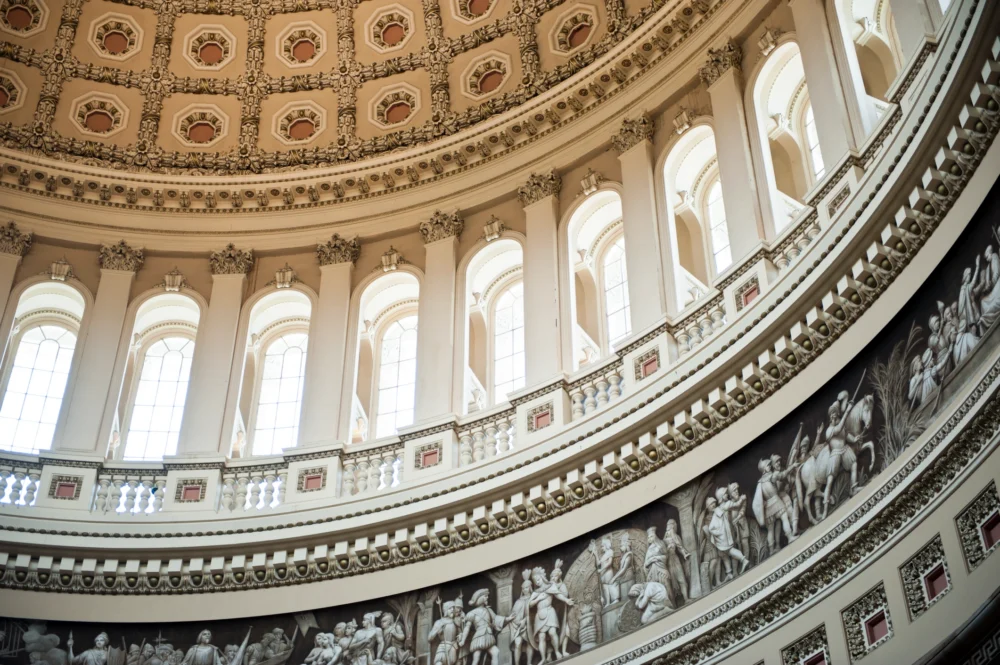
Các cuộc đàm phán thương mại đang diễn ra nhanh chóng! Tất cả các bên trong ngành chuỗi cung ứng cần nhận thức rằng những luật lệ có tác động rộng lớn này sẽ thay đổi thường xuyên và đáng kể . OIA Global công bố các bản tư vấn , bao gồm cả các cập nhật về những diễn biến thuế quan mới nhất. Chúng tôi khuyến khích bạn lưu lại một số nguồn tài liệu hữu ích này để tham khảo trong tương lai.
Tài nguyên chính

Những câu hỏi thường gặp (FAQ)
1. Tôi có cần phải hành động ngay không?
Có. Nhiều mức thuế quan này đã có hiệu lực. Nếu bạn nhập khẩu hàng hóa vào Hoa Kỳ, chi phí và yêu cầu về chứng từ của bạn có thể đã thay đổi.
2. Tôi có thể thay đổi nhà cung cấp để tránh thuế quan không?
Trong nhiều trường hợp, câu trả lời là có. OIA có thể giúp bạn tìm kiếm nguồn cung ứng ở các quốc gia hoặc khu vực có mức thuế quan thấp hơn.
3. Có cách nào để khôi phục hoặc giảm thuế quan không?
Một số chiến lược giảm thiểu có thể khả thi, nhưng một số mức thuế quan nhất định—đặc biệt là theo IEEPA—không cho phép hoàn thuế. Dựa trên sản phẩm và tuyến thương mại của bạn, chúng tôi sẽ giúp bạn xác định những gì có thể thực hiện được.
4. Điều này có ảnh hưởng đến thời gian giao hàng của tôi không?
Có thể. Mặc dù thời gian vận chuyển ổn định, việc thông quan có thể mất nhiều thời gian hơn do các yêu cầu nhập cảnh và quy trình đánh giá phức tạp hơn.
5. Liệu mức thuế quan này có thay đổi nữa không?
Có. Đây là tình hình hiện tại. Giá cả và quy định có thể thay đổi mà không cần báo trước.
6. Tôi có thể tìm thêm thông tin ở đâu?
Truy cập https://www.oiaglobal.com/news/advisories để biết thông tin cập nhật mới nhất. Hoặc liên hệ với OIA Global đại diện để cùng nhau giải quyết tình hình.
Điều này ảnh hưởng đến bạn như thế nào
Tác động đến chi phí: Thuế quan có thể làm tăng đáng kể tổng chi phí nhập khẩu sản phẩm của bạn, ảnh hưởng đến biên lợi nhuận và mô hình định giá.
Sự thay đổi trong chuỗi cung ứng: Bạn có thể cần xem xét lại nguồn cung ứng sản phẩm hoặc vật liệu để tránh mức thuế quan quá cao.
Độ phức tạp của thủ tục hải quan: Có thể cần thêm tài liệu, khai báo và các bước tuân thủ để xử lý nhập cảnh.
OIA có thể giúp gì
Nguồn cung ứng thay thế: Tận dụng mạng lưới toàn cầu của chúng tôi để khám phá các lựa chọn nhà cung cấp ở các quốc gia có thuế quan thấp hoặc không có thuế quan.
Hỗ trợ tuân thủ: Các chuyên gia hải quan của OIA có thể hỗ trợ đánh giá phân loại, điều kiện loại trừ và tuân thủ quy định.
Lập kế hoạch chiến lược: Chúng tôi sẽ hợp tác với bạn để xây dựng các chiến lược chủ động nhằm giảm thiểu tác động về mặt tài chính và hoạt động của các mức thuế hiện tại và tương lai.
Tư vấn: Chúng tôi sẽ giúp bạn đánh giá tác động của thuế quan trên toàn bộ chuỗi cung ứng và xác định các lĩnh vực rủi ro.
Nội dung liên quan
-

Giải pháp đa kênh của De Minimus Elimination & OIA
Các nhà cung cấp dịch vụ hậu cần có trụ sở tại Hoa Kỳ như OIA có vị thế tốt để hỗ trợ các nhà bán lẻ quốc tế hoạt động gần bờ trong bối cảnh loại bỏ các chi phí tối thiểu.
-
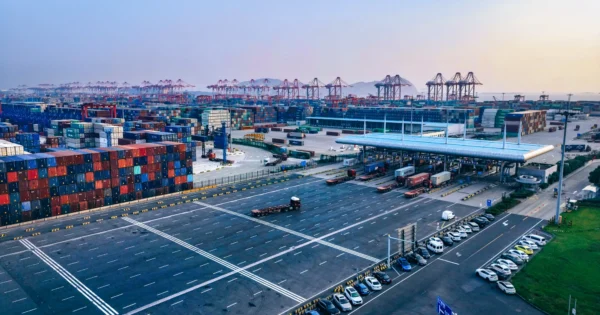
Khu thương mại tự do so với kho ngoại quan: Lựa chọn nào phù hợp với bạn?
Cả hai đều cung cấp các chiến lược giảm thuế quan cho các nhà vận chuyển nhập khẩu hàng hóa vào Hoa Kỳ, nhưng có những khác biệt quan trọng giữa hai chiến lược này...
-

Điều hướng Thuế quan: Chiến lược duy trì chuỗi cung ứng của bạn
Thuế quan mới đang làm gián đoạn chuỗi cung ứng toàn cầu, nhưng OIA giúp các doanh nghiệp thích ứng thông qua các giải pháp hậu cần, đóng gói và tìm nguồn cung ứng sáng tạo.