出荷番号を入力する。

関税の更新
Rates, country designations, and trade rules are all subject to change.
8 September 2026
Recent Developments

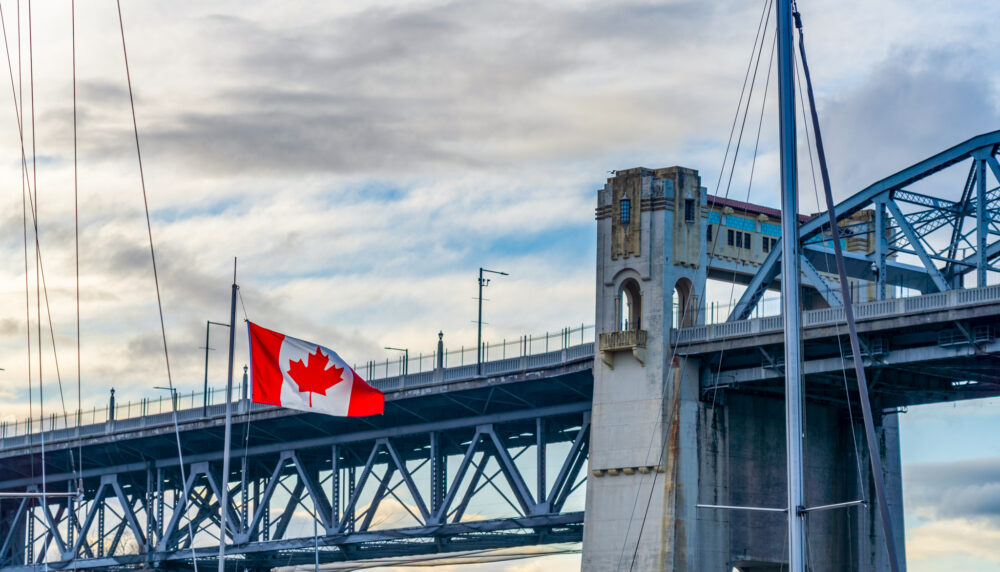
U.S. & Canada Engage in Escalating Trade War
Following a 3-day extension of negotiations, the Trump Administration decided to target Canadian products in several ways:
- Additional 50% tariff on certain Canadian goods
- Does not stack with Section 232 tariffs
- Does not apply to goods claiming chapter 98 duty-free treatment (except for the value of repairs, alterations, assembly)
- No exclusion for goods covered under the US-Mexico-Canada (USMCA) agreement
- Goods going into Foreign Trade Zones (FTZ) must be admitted as “privileged foreign status”
Canadian Countermeasures
Canada retaliated with counter-tariffs ranging from 15% to 50%, which took effect 12:01 a.m., September 8th, 2026.
- Goods in transit on September 8th are exempt; remission remains available
- 25% auto counter-tariffs remain
- Tiered 15%, 25%, and 50% surtaxes across 600+ items: steel, aluminum, dairy, appliances, ag equipment, pulp and paper, electronics, furniture and apparel.
The U.S. released additional proclamations hours after Canada’s counter-tariffs took effect—two of them modify the scope of the 50% tariff lists. Outright import bans on certain Canadian goods are scheduled for Sept. 29th via Section 338.
U.S. Customs Updates Post Summary Corrections (PSC) Procedures
Effective Aug. 5th, 2026
Post Summary Correction (PSC) procedures can affect duty corrections, valuation updates, classification changes, and compliance workflows. This is important for customs brokers and importers because PSCs are the primary mechanism for correcting entry summaries after filing but before liquidation.
- Updated eligibility rules for when a PSC can be filed.
- Changes to how PSCs interact with protests, liquidations, and other post-entry actions.
- Expanded validation and automation within ACE.
- New processing logic intended to improve accuracy and reduce conflicting post-entry filings.

Section 301: Forced Labor Tariffs
July 23rd, 2026
The United States Trade Representative (USTR) will enact a 10-12.5% ad valorem duty rate on 60 countries for their failure to stop goods from being produced and/or shipped using forced labor. A country-by-country list can be found here.
- The new levies counter the expiration of a temporary 10% global tariff under Section 122, which was installed after the Supreme Court rejected duties previously imposed under the International Emergency Economic Powers Act (IEEPA).
- For countries with Most-Favored Nation (MFN) rates, such as the EU, Japan and South Korea, the tariff charged will be net of the MFN duty.

Section 301: Brazilian Goods
July 22nd, 2026
Following a yearlong Section 301 investigation by the Office of the U.S. Trade Representative (USTR), the U.S. imposed a new 25% tariff on most Brazilian imports, citing unfair digital trade and environmental policies.
- Key exemptions: beef, coffee, crude oil, orange juice, and civil aircraft parts. Roughly half of all Brazilian goods are exempt from the 25% levy to prevent major supply chain shocks.
- Key inclusions: ethanol, sugar, machinery, and footwear.
Brazil responded by requesting World Trade Organization (WTO) consultations and signing a credit line for affected firms.

Aug. 13th, 2026
A U.S. trade court rejected a challenge to President Donald Trump’s suspension of the de minimis exemption for low-value parcels, solidifying the law long-term.
Aug. 4th, 2026
So far the Trump Administration has paid out roughly 60% ($100b / $165b) of the money collected from the president’s “liberation day” tariffs.
July 23rd, 2026
The United States Trade Representative (USTR) enacted a 10-12.5% ad valorem duty rate on 60 countries for their failure to stop goods from being produced and/or shipped using forced labor. A country-by-country list can be found here.
- This action compensates for the administration’s 10% global tariff, invoked under Section 122 of the Trade Act of 1974, which was set to expire July 24th. These Section 122 tariffs were enacted following the Supreme Court’s invalidation of IEEPA tariffs.
July 7th, 2026
U.S. CBP officially launched CAPE Phase 2, expanding refund eligibility to include certain reconciliation-flagged entries. Importers with eligible entries that were previously excluded should review their records, as additional refunds may now be available. There is still no mechanism for entries that have already liquidated and are beyond the 80-day Phase 1 filing deadline.
June 1st, 2026
The U.S. made temporary adjustments to Section 232 tariffs on steel, aluminum and copper imports, targeting specific types of agricultural and industrial goods. The changes will stay in effect until Dec. 31st, 2027.
- Agricultural equipment (combines, harvesters, etc.) reduced to 15% tariff rate (previously 25%)
- Aluminum lithographic plates and steel racks added to the list of derivative products that qualify for the 25% tariff rate. ,
International Emergency Economic Powers Act (IEEPA)
Aug. 4th, 2026
So far the Trump Administration has paid out roughly 60% ($100b / $165b) of the money collected from the president’s “liberation day” tariffs.
IEEPA Tariff Refunds: ACH Support Available
Importers must ensure their ACH refund accounts are properly configured with CBP. If you have not yet established or confirmed your ACH refund setup, we strongly recommend doing so. Filing a protest:
- 返金権利を保持する
- CBPが返金手続きの一環として抗議を要求した場合、あなたを保護する。
- 訴訟が続いている間、請求が有効な状態を維持する
清算日から180日以内に異議申立てを行わないと、支払った関税を回収できなくなる恐れがある。 清算手続きの詳細はこちらを参照のこと。
OIA Global いくつかの方法でOIA Global :
- 入力データを再確認し、IEEPAの影響を受ける適格な出荷を特定する
- 清算期日を追跡し、期限が守られるようにする
- 代わりに異議申立てを準備し提出する
- 抗議をまとめて提出すれば効率が上がる
- 弁護士と相談せよ(該当する場合)
Consolidated Administration & Processing of Entries (CAPE) System
CAPE Phase 2
July 7th, 2026: CBP officially launched Phase 2 of the CAPE rollout, expanding refund eligibility to include certain reconciliation-flagged entries. Importers with eligible entries that were previously excluded should review their records, as additional refunds may now be available. There is still no mechanism for entries that have already liquidated and are beyond the 80-day Phase 1 filing deadline.
CAPE Phase 1
April 20th, 2026: Phase 1 of the Consolidated Administration & Processing of Entries (CAPE) system went live via U.S. Customs & Border Protection’s (CBP) ACE Portal. Although still limited in scope, CAPE does allow importers to reclaim IEEPA duties and interest. Importers should continue to monitor entry liquidation statuses, as the liquidation date is the deciding factor for use of the CAPE system.
第232条 関税
Section 232 Metals
Key Changes (Effective April 6th, 2026, 12:01 a.m. ET)
Tariffs will now be assessed based on the full value of imported goods—not reduced foreign pricing.
- 50% tariff: Articles made entirely or almost entirely of steel, aluminum, or copper (e.g., coils, sheets).
- 25% tariff: Derivative products substantially made of these metals.
- 15% tariff (through 2027): Certain metal-intensive industrial and electrical grid equipment to support U.S. industrial expansion.
- 10% tariff: Products manufactured abroad using entirely U.S.-origin metals.
Exemption: Goods containing 15% or less of these metals are no longer subject to Section 232 tariffs.
June 1, 2026: The U.S. made temporary adjustments to Section 232 tariffs on steel, aluminum, and copper imports, targeting specific types of agricultural and industrial goods.
- Agricultural equipment (combines, harvesters, etc.) reduced to 15% tariff rate (previously 25%)
- Aluminum lithographic plates and steel racks have been added to the list of derivative products that qualify for the 25% tariff rate.
The changes will stay in effect until Dec. 31st, 2027.
Implementation Guidance
Implementation guidance related to the June 1st, 2026 Presidential Proclamation further adjusting Section 232 tariffs on aluminum, steel, copper, and derivative products. Importers should review affected products, evaluate eligibility under the new provisions, and ensure documentation supporting country-of-origin, melt-and-pour, and smelt-and-cast requirements remains current.
Additional Products Added
Effective June 8th, 2026, several new HTS classifications were added to the scope of Section 232 duties, including certain lithographic printing plates and metal furniture products.
85% U.S.-Metal Content Threshold
CBP reduced the qualification threshold for products seeking preferential treatment based on U.S.-origin metal content. Beginning June 8, products must contain at least 85% U.S.-origin aluminum, steel, or copper, rather than the previous 95% threshold.
New HTSUS Provisions
New HTSUS Provisions (9903.82.20–9903.82.26): CBP introduced new tariff provisions covering certain derivative steel products, agricultural equipment parts, fixed industrial equipment, and mobile industrial equipment. These provisions establish revised duty treatments and reporting requirements for qualifying imports.
USMCA Steel Derivative Treatment
Certain steel derivative products from Canada and Mexico that qualify under the United States-Mexico-Canada Agreement (USMCA) may benefit from a partial duty exemption. Under the new framework, qualifying U.S. content may receive duty-free treatment, while non-U.S. content remains subject to Section 232 duties.
Copper Reporting Requirements
CBP has announced that additional reporting requirements related to the country of copper smelt and cast will be implemented in ACE at a future date. Importers should monitor CBP guidance for implementation timelines and filing instructions.
Section 232 Pharmaceuticals
100% tariff on patented pharmaceutical products and ingredients. Effective in 120 days for large companies (July 31st, 2026) and 180 days for smaller companies (September 29th, 2026).






Reduced tariffs (15%) apply for certain places: EU, Japan, Korea, Switzerland, Liechtenstein, and the United Kingdom (per recent agreement).
0% tariff available through Jan. 20th, 2029, for companies entering Most Favored Nation (MFN) pricing agreements with the U.S. Department of Health and Human Services, and onshoring agreements with the Department of Commerce. 20% tariff applies if only onshoring agreements are executed.

De Minimis Exemption for Low-Value Parcels
In an Aug. 13th decision, a U.S. trade court rejected a challenge to President Donald Trump’s suspension of de minimis, solidifying the law long-term.
July 30th 2025, Executive Order: The U.S. suspended the duty-free de minimis classification for all countries, which applied to parcels valued <$800. The order took effect on August 29th, 2025.

History: Executive Orders & Regulations
March 4th, 2026: the U.S. Court of International Trade ordered U.S. Customs and Border Protection (CBP) to liquidate certain unliquidated entries without applying IEEPA duties and to reliquidate entries that are not yet final, potentially paving the way for refunds.
March 6th, 2026: CBP informed the court it is not yet ready to process refunds but expects it could develop the necessary functionality in the Automated Commercial Environment (ACE) within approximately 45 days. The anticipated process may require importers to identify affected entries, after which ACE would validate them, recalculate duties without IEEPA tariffs, and aggregate potential refunds and interest before payments are issued by the U.S. Treasury.
Supreme Court Rejects IEEPA Tariffs
February 20th, 2026: Following a key Supreme Court decision that invalidated tariffs under the International Emergency Economic Powers Act (IEEPA), the Trump Administration implemented a new 10% global tariff under Section 122 of the 1974 Trade Act. This is a new tariff under a different legal authority and is not automatically affected by the Court’s ruling on IEEPA. Other tariffs under sections 301 and 232 remain unaffected.

Feb. 3rd, 2026: The U.S. and India signed a trade deal, reducing India’s tariff rate from 25% to 18%.

October 30th, 2025: the U.S. agreed to delay imposing higher tariffs on China for another year. As part of a consensus agreement, the U.S. lowered tariffs on imports from China to 10%, down from 20%. A variety of Section 301 and Section 232 tariffs remain in place, and goods from China will still face a duty burden of roughly 47%, according to U.S. Trade Representative Jamieson Greer.
August 7th, 2025: the U.S. enacted sweeping reciprocal tariffs on imports from 60+ countries, with duties ranging from 10% to over 100%, depending on origin and sector. Additions like sector-specific penalties and anti-transshipment provisions further complicate the trade landscape. The impact on landed costs, sourcing strategies, and compliance protocols will be significant.
- メキシコは猶予を与えられ、現行税率はさらに90日間延長された。
- EUは対抗措置を6カ月遅らせた。
- 米国は大統領令で、インド製品に25%の追加関税を課し、2025年8月27日に発効した。
- 米国は大統領令の一環として、ほとんどのブラジル製品に50%の関税を適用する:ブラジル政府による米国への脅威に対処するためである。
貿易交渉は急速に変化している! サプライチェーン業界の全ての関係者は、これらの広範な影響力を持つ法律が定期的に大幅に変更されることを認識すべきだ。OIA Global は勧告を公表している、最新の関税動向に関する更新情報を含む。今後の参照用に、これらの有用なリソースの一部をブックマークすることをお勧めする。
主要リソース

よくある質問(FAQ)
1.今すぐ行動する必要があるか?
そうだ。これらの関税の多くはすでに施行されている。米国に商品を輸入する場合、コストや必要書類が変更される可能性がある。
2.関税を避けるためにサプライヤーを変更することは可能か?
多くの場合、そうだ。OIAは、より関税の低い国や地域での調達オプションを検討するお手伝いをすることができる。
3.関税を回収または削減する方法はあるか?
いくつかの軽減策が利用できるかもしれないが、関税によっては(特にIEEPAにおいては)関税の払い戻しができないものもある。貴社の製品とトレードレーンに基づき、何が可能かを判断するお手伝いをする。
4.納期に影響はあるか?
可能性がある。輸送スケジュールは安定しているが、入国要件や審査が複雑なため、通関に時間がかかる可能性がある。
5.関税はまた変わるのか?
はい。料金やルールは予告なく変更されることがある。
6.詳しい情報はどこで入手できるか?
最新情報はhttps://www.oiaglobal.com/news/advisories。または、OIA Global 担当者に連絡し、状況を一緒にナビゲートしてもらう。
これがあなたにどのような影響を及ぼすか
コストへの影響:関税は製品の陸揚げコストを大幅に引き上げ、マージンや価格設定モデルに影響を与える可能性がある。
サプライチェーンのシフト: 過度な関税を避けるため、製品や原材料の調達先を再考する必要があるかもしれない。
税関の複雑さ:入国手続きには、追加の書類、申告、遵守事項の手続きが必要となる場合がある。
OIAがお手伝いできること
代替調達:当社のグローバルネットワークを活用し、低関税国または無関税国のサプライヤーの選択肢を探る。
コンプライアンス・サポート:OIAの通関スペシャリストは、分類審査、適用除外の適格性、規制遵守を支援することができる。
戦略的プランニング:現在および将来の関税が財務および経営に与える影響を軽減するための積極的な戦略について、貴社と協力する。
コンサルティングサプライチェーン全体における関税の影響を評価し、リスク領域を特定するお手伝いをする。