输入您的货物编号。

OIA Global 每月发布一份全面的市场报告!
这些内容丰富的文件利用行业领先的新闻来源提供的信息,重点介绍重要的供应链新闻和事件。下文提供了不同内容板块的概览和最新版本的链接。
市场趋势
Middle East Oil Shipping
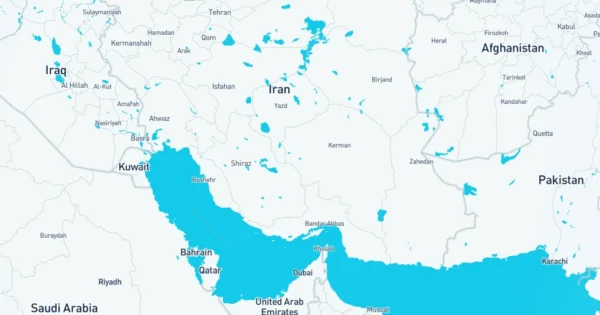
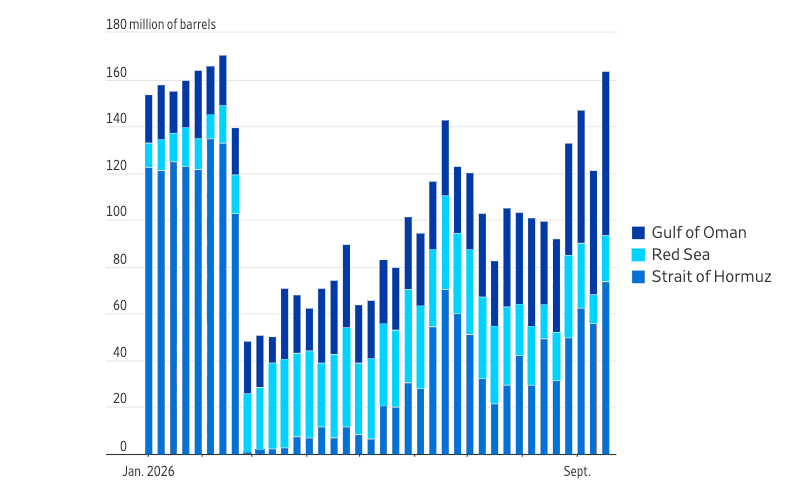
Shippers are sending almost as much crude oil out of the Strait of Hormuz as before the Iran war, but not enough barrels of what the world needs most: diesel.
The head of ARAMCO, Saudi Arabia’s state oil producer, says that global oil stockpiles have become “scarily thin”, putting markets at risk unless the Strait of Hormuz reopens. The world had about 10B barrels of oil stocks when the U.S-Iran war began, but this has fallen to <6B, with only 10% practically available.
- Spot rates from the Far East to U.S. West/East Coast are +324% since February when the Hormuz crisis began.
Graphic: Middle East oil exports (weekly)
Source: Kpler, Wall Street Journal.
Carriers Slowly Return to Suez Canal
- Maersk and Hapag-Lloyd’s AE19 and AE15 services will now transit via the Suez Canal rather than the Cape of Good Hope.
- The Premier Alliance (ONE/HMM/Yang Ming), one of the primary holdouts, is also switching a service back to the Suez.
These strategic changes represent a gradual return to the trans-Suez corridor but not a wider return of the East-West network.
DP World plans to grow its truck fleet by about 40%, adding new land routes that link Europe, the U.S. and Asia to the Persian Gulf. Essentially, they’re betting that shipping through the Strait of Hormuz won’t return to the status quo from before the U.S.-Iran war.

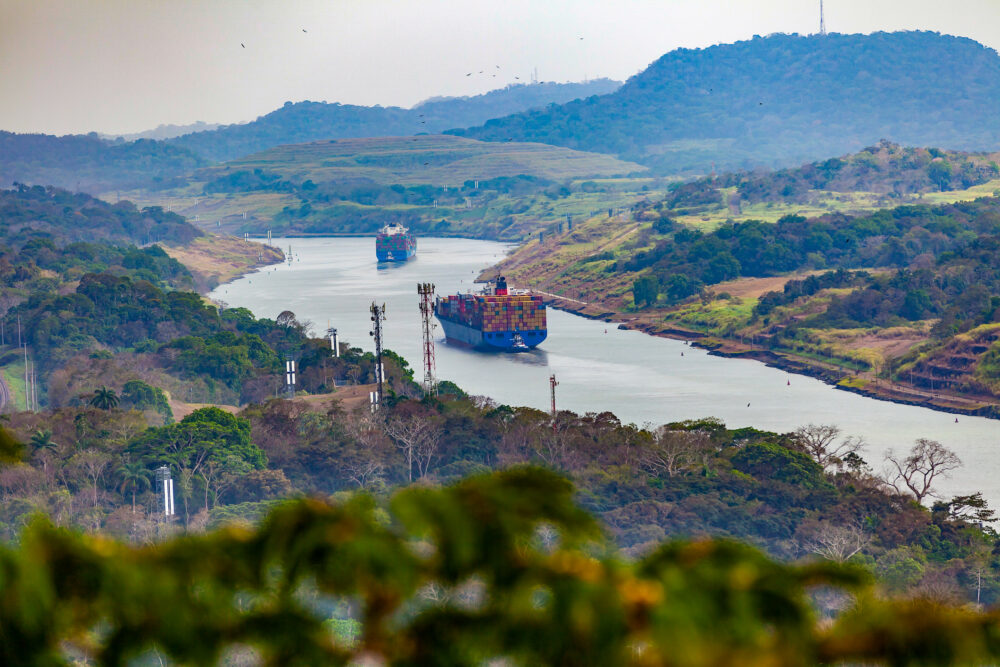
Panama Canal Eases Restrictions
The Panama Canal Authority is easing some of its recent draft restrictions after rain has eased pressure in Gatun Lake.
- The maximum draft of the Neopanamax locks has been increased by 1’ effective immediately (now 49’ or 14.94 meters)
- 33 transit slots per day, starting Oct. 15th (10 Neopanamax and 23 Panamax)
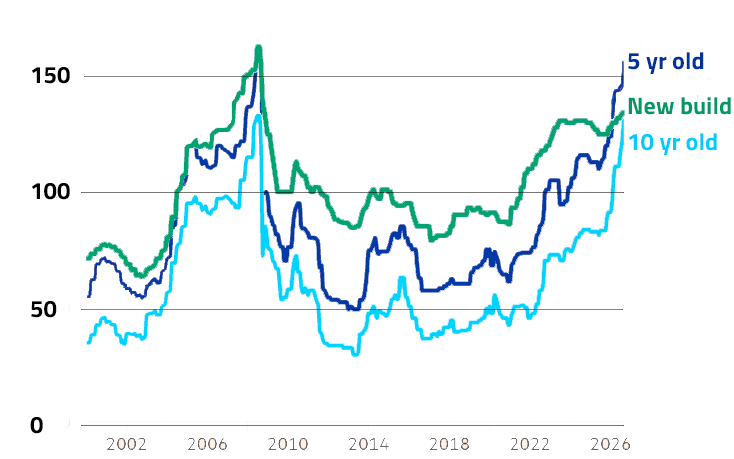
Oil supertanker prices reach historic highs: the value of older supertankers has exceeded new-build vessels for the first time on brokers’ records.
Graphic: Monthly average prices for South Korean-built vessels ($ in millions)
Source: Braemar, Financial Times.
Market Trends (continued)
Asian Nations Lead in Connectivity
China’s liner shipping connectivity index reached 1,347 in September 2026, more than double the scores of second-ranked South Korea (633) and Singapore (626). Asia dominates overall, with 9/15 top-ranked economies.
The United Nations Conference on Trade and Development (UNCTAD) index gauges a country’s integration into container-shipping networks using factors including vessel calls, port capacity, carrier and service availability, largest ship size, and the number of countries reached through direct services.

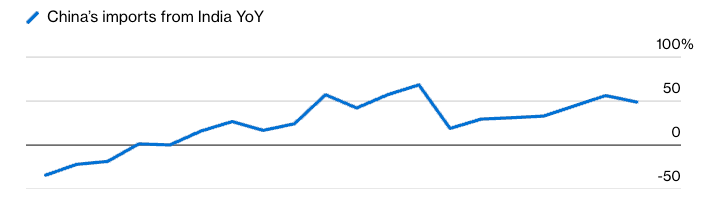
India’s imports to China are rebounding, but trade remains lopsided in China’s favor. Indian exports to China rose 40% from April-August of this year.
Source: China’s Customs General Administration, Bloomberg.
Stronger rail connectivity between China and the Mekong region is providing customers with additional options for selected regional cargo flows. >21M tons of cross-border cargo have now moved via the China–Laos railway since operations began.

The British government has set ambitious targets to increase rail freight volumes: +40% by 2040 and +75% by 2050. This could mean more than £15B moving by rail each year, with Great British Railways (GBR) serving as the primary driver.
The U.S. merchandise-trade deficit widened in August: merchandise imports increased 5.5%, led by a +16.6% surge in the value of inbound shipments, primarily driven by industrial supplies such as petroleum products.
Surging Domestic Intermodal Volumes
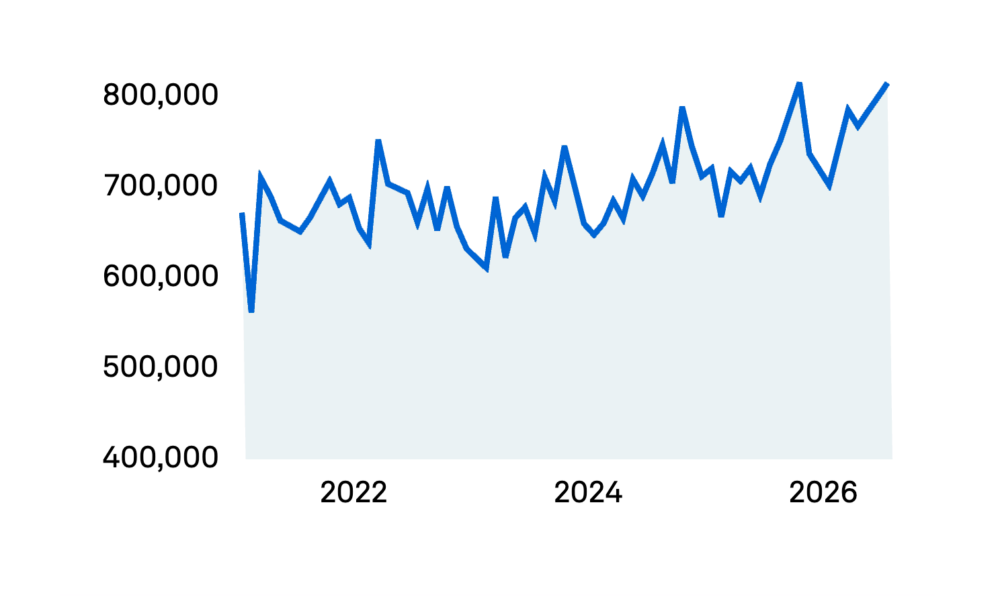
If regulators approve the Union Pacific Railroad (UP) and Norfolk Southern (NS) Railway merger, the combined railroad could convert 1.2M truckloads to domestic intermodal within three years. Nearly 2/3 of those conversions would occur on lanes greater than 2,000 miles in length.
Graphic: Intermodal volume, domestic containers, hauled by railroads
Source: Intermodal Association of North America, Journal of Commerce, S&P Global.

Canada’s federal government is committing C$1.2B (USD $843M) to ocean protection and marine safety as it prepares for increased commercial vessel traffic tied to new energy, LNG, and port projects.
- Transport Canada will replace aging digital systems used for cargo inspections, port state control, domestic vessel oversight and seafarer certification. The new system will integrate marine data and improve risk analysis, enforcement, and regulatory services.
- New infrastructure projects: expansion at the Port of Vancouver and the Roberts Bank Terminal 2 project will bring additional ship traffic to the West Coast.
- DP World’s Centerm terminal (Vancouver) has increased container capacity by 65% with a 75-metre berth extension, expanded on-terminal rail capacity, and automated truck gates.
法律与立法
EU’s New Packaging Regulations
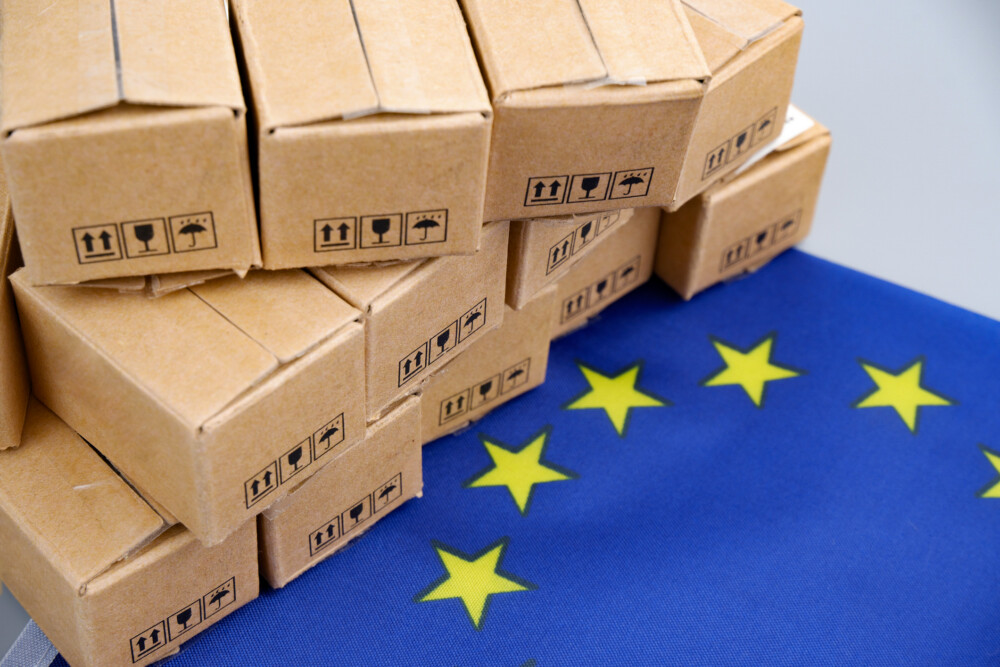
The EU’s new Packaging & Packaging Waste Regulation (PPWR) will establish rules throughout the EU and require retail businesses to use more sustainable packaging standards. Different aspects of the PPWR regulation will be phased in over time.
- All packaging must be recyclable by 2030
- Harmonizes packaging standards across EU countries, reducing fragmentation
- Reduce PFAS “forever chemicals”
- From 2028, there will be a harmonized labelling system for packaging to facilitate waste sorting and improve the efficiency of recycling.
Compliance will be rooted in data. Brands need better lot controls during fulfillment: sub-SKUs, inventory identifiers, etc. So that warehouse employees can distinguish different versions.
Laws & Legislation (continued)

The EU has new customs declaration requirements for steel imports, starting October 1st 2026. Shippers must provide traceable evidence showing where steel was originally melted and poured.
Building Canada Strong Act
The bill intends to boost Canada’s supply chain capabilities in several ways:
- Designation of “national trade corridors” that will have performance metrics to prevent bottlenecks and improve efficiency.
- Overhauls the governance system for Canada’s ports, allowing them to pursue more private investment.
- Speeds up approvals and removes some regulatory hurdles for lower-risk infrastructure, such as smaller bridges and rail connections.
“It’s really inspired by this imperative to diversify our overseas markets, to diversify away from the United States” – Steven MacKinnon, Canada’s Transport Minister

基础设施
Infrastructure (continued)

Romania is modernizing the 113km Brașov – Sighișoara line, a vital link on the Rhine-Danube and Baltic Sea-Black Sea-Aegean Sea corridors within the EU’s Trans-European Transport Network (TEN-T). The project is expected to be completed in 2029 and is estimated to cost €2.25B.
- The upgraded railway will accommodate 22 freight trains daily—roughly 6M tonnes of freight—and increase the maximum speed to 120km/h.
The Delaware Container Terminal (DCT) is being developed on a 137-acre site and will be capable of accommodating vessels of up to 16,000 TEU, with 1.2M TEU annual capacity.
- Infrastructure will include a 2,700’ quay with a 45’ depth
- The terminal will have seven electric ship-to-shore (STS) gantry cranes, 24 electric rubber-tyred gantry cranes, and provide access to Class I rail services and major highways (I-495, I-95, and I-295).
The Montgomery Intermodal Container Transfer Facility (Alabama) remains on schedule for an early 2027 opening. The $100M, 272-acre terminal serves as an inland extension of the Port of Mobile’s container gateway. It will connect central Alabama manufacturers, distributors, and exporters with Mobile through direct CSX rail service, creating a rail alternative to truck drayage between the coast and Montgomery.
并购

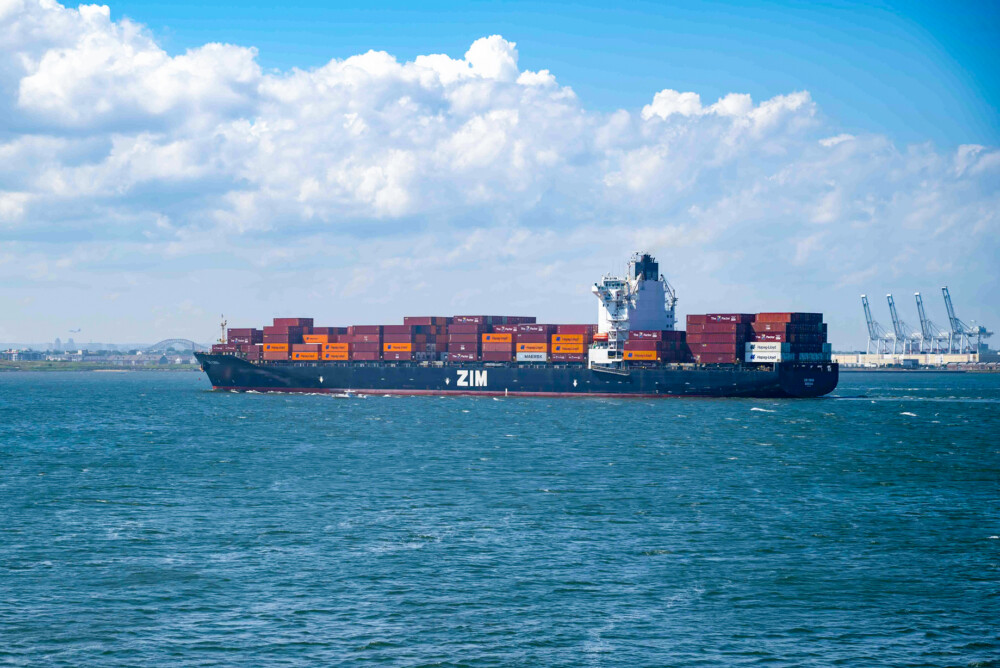
Hapag-Lloyd’s Purchase of ZIM in Limbo
Israel’s finance ministry is requiring a new review of Hapag-Lloyd’s proposed $4.2B acquisition of Zim Integrated Shipping Services. Key concerns include:
- Direct shipping routes to Asia
- Stronger state protection of Israel’s “golden share,” which gives it special ownership rights in ZIM.



Deutsche Lufthansa AG and Air France-KLM increased their offers for a minority stake in TAP Air Portugal to more than €1B (USD $1.1B). Portugal’s government plans to select a buyer sometime in October.
Mergers & Acquisitions (continued)
After a year-long delay, the cargo divisions of Qatar Airways, Malaysia Airlines and IAG Group (parent company of British Airways) are finally prepared to launch their joint cargo venture. Customers should benefit from the combined strengths of the three airlines, with cargo moving in a coordinated fashion across multiple carriers, hubs, and regions.
Ocean Network Express (ONE) will consolidate its East Asia and South Asia regional headquarters into a new Asia-Pacific headquarters in Singapore and centralize management of its East/West/South Africa markets in Dubai, effective April 1st, 2027.
Kuehne+Nagel agreed to a comprehensive, long-term strategic collaboration with Amazon which will allow them to leverage Amazon Web Services (AWS) and the company’s data center infrastructure.
CMA CGM Group successfully closed its acquisition of FedEx Supply Chain at an enterprise value of $1.4B. The multi-year commercial agreement should unlock broader collaboration in air and ocean freight and contract logistics services.
可持续性
Google, Microsoft, and DSV have joined the Zero Emission Maritime Buyers Alliance (ZEMBA).
A single deal will nearly double the U.S. battery-electric Class 8 fleet, as 2,500 Tesla Semi vehicles were purchased through the Zero-Emission Truck Shipper-Carrier Alliance Leading Electrification (ZET SCALE), a program jointly operated by Catalyst Mobility and the Smart Freight Centre.
Biofuels
Biofuels made from crops and organic waste are becoming cheaper and more widely used. Alternative-fuel-capable tonnage has already grown from just 0.4% of the global fleet in 2020 to 5.2% in 2026, led primarily by LNG and methanol systems. Biofuels have an advantage over other alternative fuels (i.e., methanol or ammonia) because they are easy to adopt.
Biofuels have a slightly lower energy density than conventional fuels, meaning that ships must burn about 7-10% more fuel per journey.
India’s first port-based e-methanol production facility will be a plant at Deendayal Port Authority (DPA) in Kandla, Gujarat. The plant is expected to produce green methanol at a much lower cost compared to other global producers, just $750 per ton, against a global rate of $1,300 per ton. The targeted completion date is Q2, 2027.
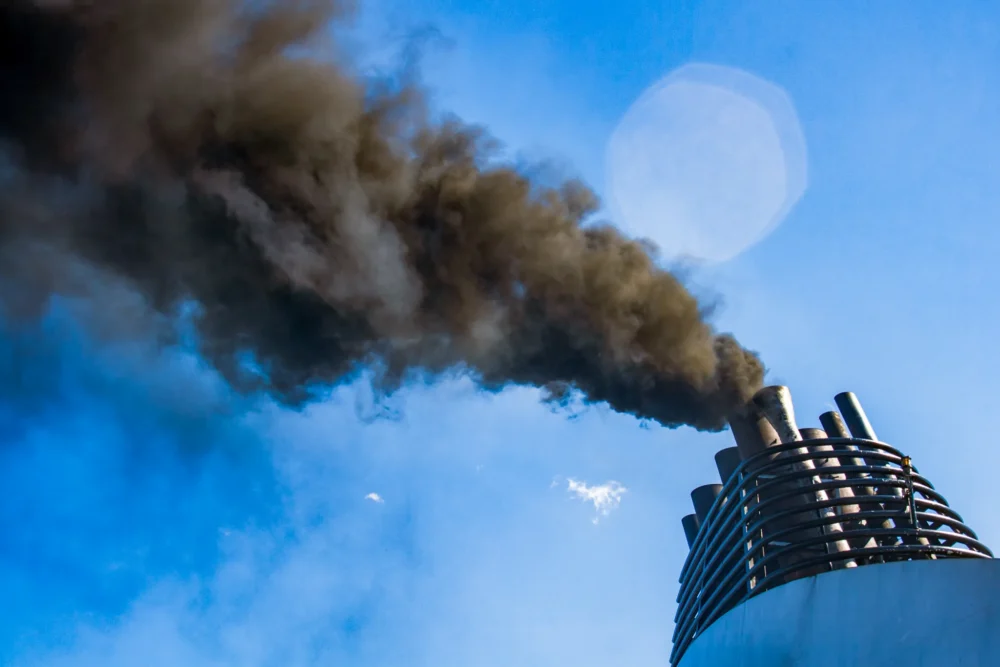
The electrification of road freight trucking is happening much faster than for passenger vehicles, as rigs are used more intensively and have a quicker turnover. This structural force could undermine long-term oil demand across the world—diesel consumption in China will drop >10% this year.
“Our aspiration is to use 100% EV vehicles in our fleet system in the next three to four years as we implement our fleet renewal plan” – Li Wenjun, President of Nippon Express (China)
The pace of adoption around the world largely depends upon government support. Beijing has operated an annual scrappage-subsidy program for older diesel trucks since 2024, offering cash incentives to encourage fleet operators to replace aging vehicles with cleaner alternatives.
运输技术
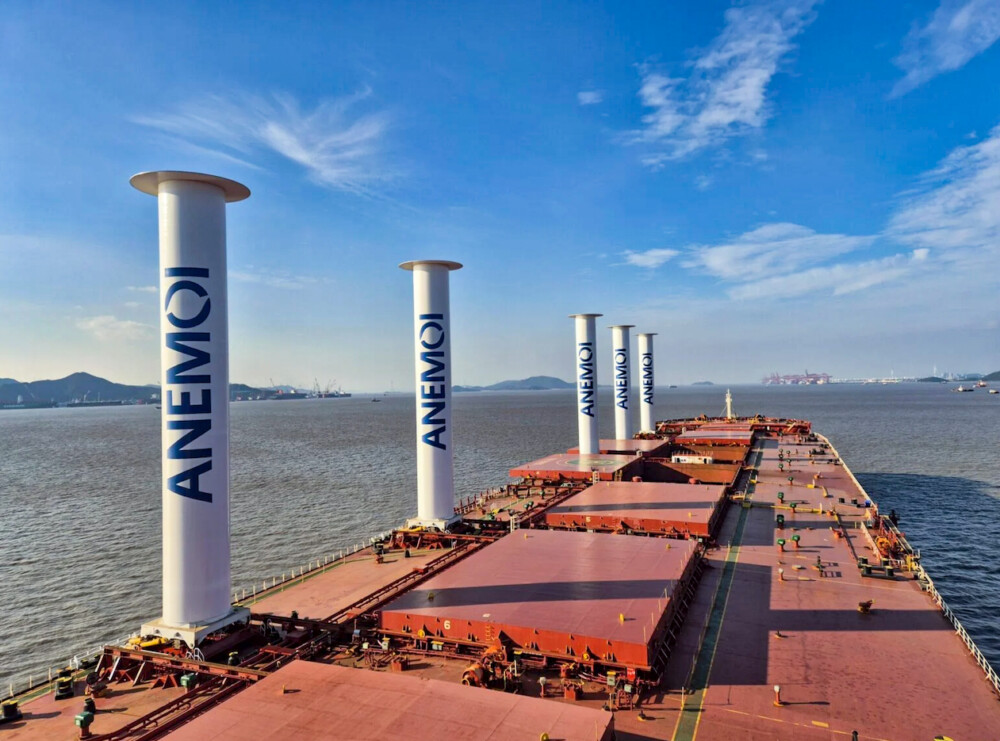
100+ large merchant ships are now equipped with modern wind propulsion systems, representing >5M deadweight tons of carrying capacity. These systems are designed to work alongside conventional engines, using the wind to reduce fuel consumption whenever conditions allow.
Anemoi Marine Technologies completed the installation of five Rotor Sails onboard the 400,000 dwt Very Large Ore Carrier (VLOC), Sohar Max, making it the largest vessel to receive wind propulsion technology to date.
Image source: Anemoi Marine Technologies/Vale.
An August 2026 Gartner survey found that AI now accounts for 2/3 of supply chain digital investments, though 55% of chief supply chain officers say they’re still working out the actual return.