Introduzca su número de envío.

Market Report - 9/2026
Estos documentos informativos y completos destacan noticias y eventos críticos de la cadena de suministro, con información procedente de las principales fuentes del sector.
OIA Global elabora cada mes un completo informe de mercado.
Estos documentos informativos destacan noticias y acontecimientos importantes de la cadena de suministro utilizando información de las principales fuentes periodísticas del sector. A continuación se ofrece un resumen de las distintas secciones de contenido y un enlace a la edición más reciente.
Tendencias del mercado

More Countries Explore Arctic Shipping
The Arctic is becoming increasingly attractive as melting polar ice allows more ships to avoid traditional maritime chokepoints. Arctic shipping shortens the journey between Europe and Asia by around 7,000km and 10 days.
The Northern Sea Route (NSR) is broken up into 28 sections with different guidelines depending on the varying ice conditions. Rosatom, a Russian state-controlled company, issues permits to sail through each distinct area.
China
South Korea
President Lee Jae Myung views Arctic shipping as a priority and hopes to make it a regular trade route by 2030. Government officials think the NSR could help strengthen Busan’s position as a global maritime hub.
Other Countries
Japan and India have also expressed interest in NSR shipping opportunities.
Supply Chain Bottlenecks Move from Sea to Shore
- Data shows 4.3M TEUs are now waiting to berth at container ports due to port congestion. This volume of stalled container capacity is a new record globally, breaking the previous record set during the COVID-19 pandemic.
- The orderbook-to-fleet ratio is 38.7%. The orderbook is heavily skewed toward large mainline vessels rather than feeders and smaller regional ships.
- Congestion is idling about 1.7M TEUs—enough to rank as the world’s 8th-largest carrier—while late ships are running 5-5.5 days behind. These issues are becoming structural, and rates will increasingly depend upon port and inland capacity, not the number of ships deployed.
- Ocean shipping fees are outpacing fuel costs: marine fuel costs increased about 30% this year while some container shipping fuel surcharges rose as much as 75%.




Emerging Multimodal Corridors in Southeast Asia
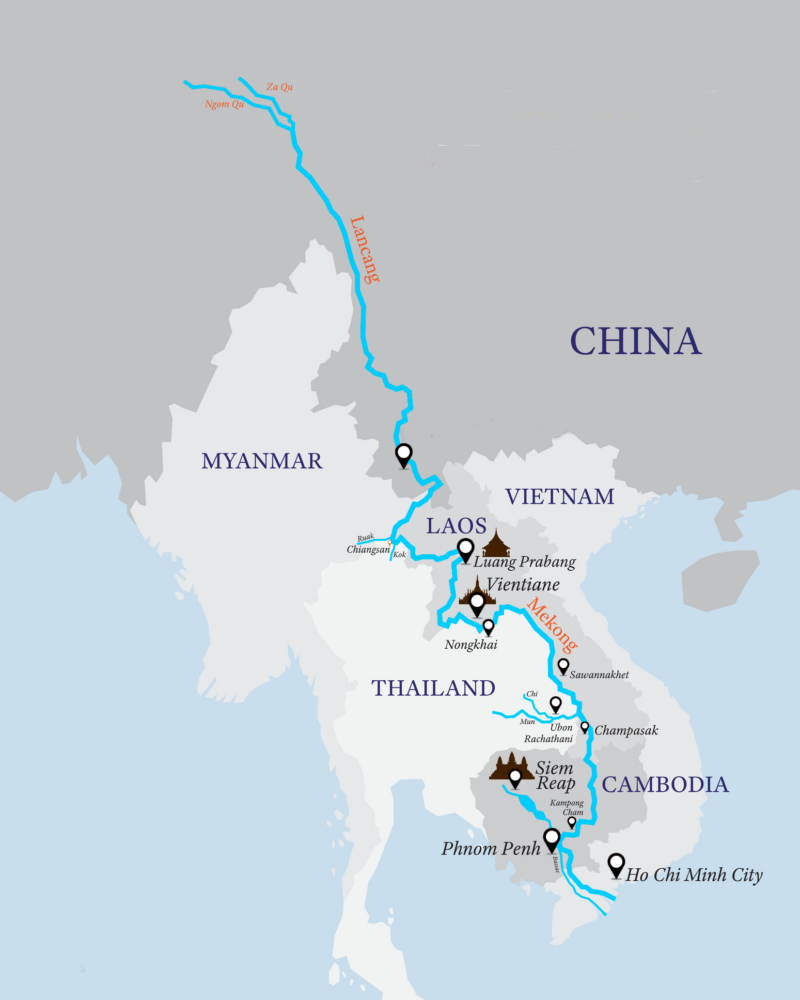
Multimodal solutions are connecting inland production centers with regional markets, giving shippers in Southeast Asia new transportation options, reduced handling requirements, and more efficient connections between factories and ports.
- In the Mekong region, integrated road and rail solutions are providing stronger connectivity between China and its direct neighbors.
- The China–Laos–Thailand railway continues to provide an alternative transportation corridor.
- Cross-border trucking networks between Vietnam, Cambodia, and Laos, are continuing to develop.
- New cross-border solutions linking Cambodia with Laos and onward to China are supporting temperature-controlled cargo.
Market Trends (Panama Canal)

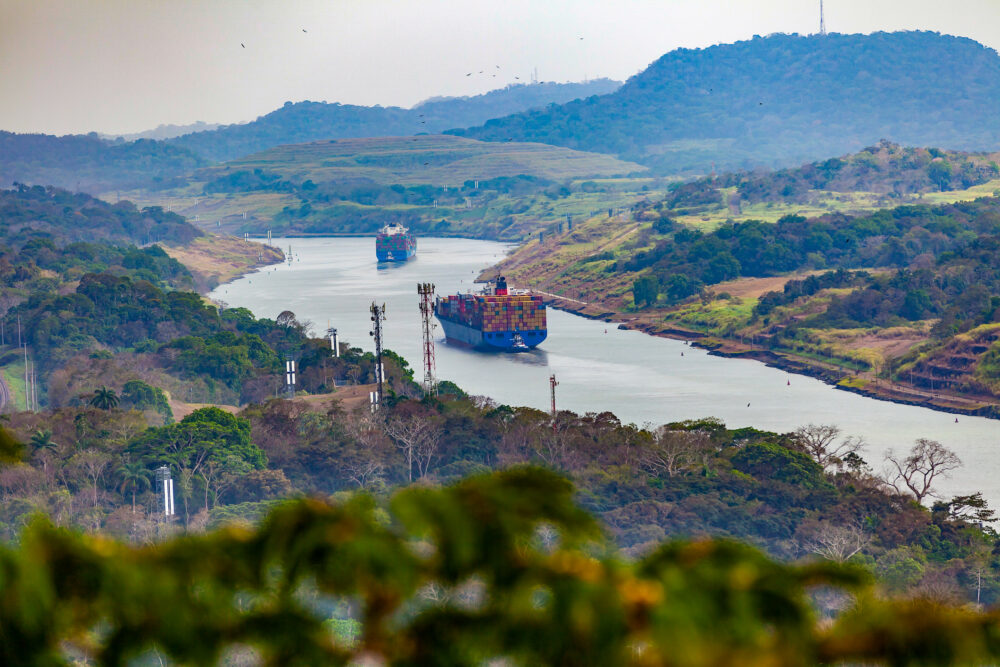
Amidst heavy demand and persistent drought conditions, the Panama Canal Authority is making significant changes to the waterway:
- Allowing the same customer to secure more than one NeoPanamax booking slot for the same date, or to book slots for two or more consecutive dates.
- Lowering the waterway’s draft (underwater depth) to compensate for drought conditions: the maximum draft is 47.5 feet (14.48 meters) as of September 3rd.
- Cutting daily ship transits: 32 vessels per day starting September 15th, as compared to the current 36.
In response, ocean carriers are increasing container fees since vessels must carry less cargo, so their hulls can accommodate the shallower draft.
The graphic shows the average auction price for transit slots on the Panama Canal, by lock size. A shipper recently paid $5.3M to secure its spot, a new record that broke the previous one set last month.
Source: Argus, Financial Times.
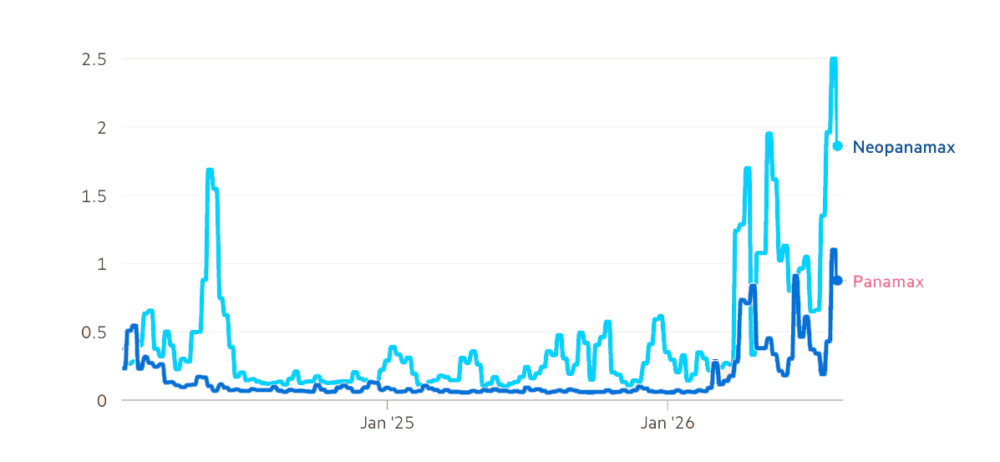
High slot reservation prices occur when ships arrive at the Canal without a reservation and then bid against other unreserved ships. “These are vessels that did not have a slot. They came and waited, and when the slot opened, they bid for it, and they bid against each other. We do not set prices; the market sets the price.”
– Ricaurte Vasquez, Administrator of the Panama Canal Authority (ACP)
General guideline: a 10,000-TEU vessel loses about 450 TEUs of container capacity per foot of draft restricted.
Market Trends (continued)
U.S. East Coast Trends
- Drayage rates at U.S. East Coast ports have increased due to frontloading and driver shortages.
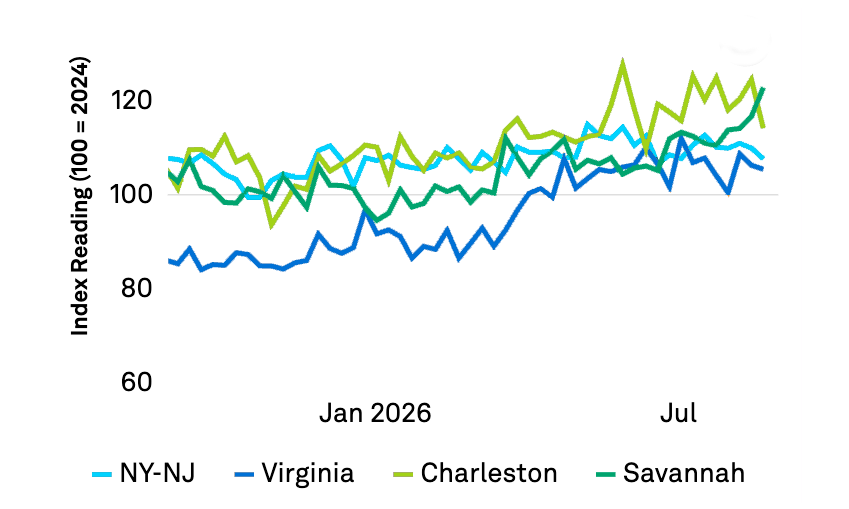
- Rates for the Asia-U.S. East Coast trade are +42% since the start of the Iran war and are now >$3,300 higher than West Coast prices ($10,527 as compared to $7,193).
Source: Drayrates-JOC National Drayage Price Index, S&P Global.
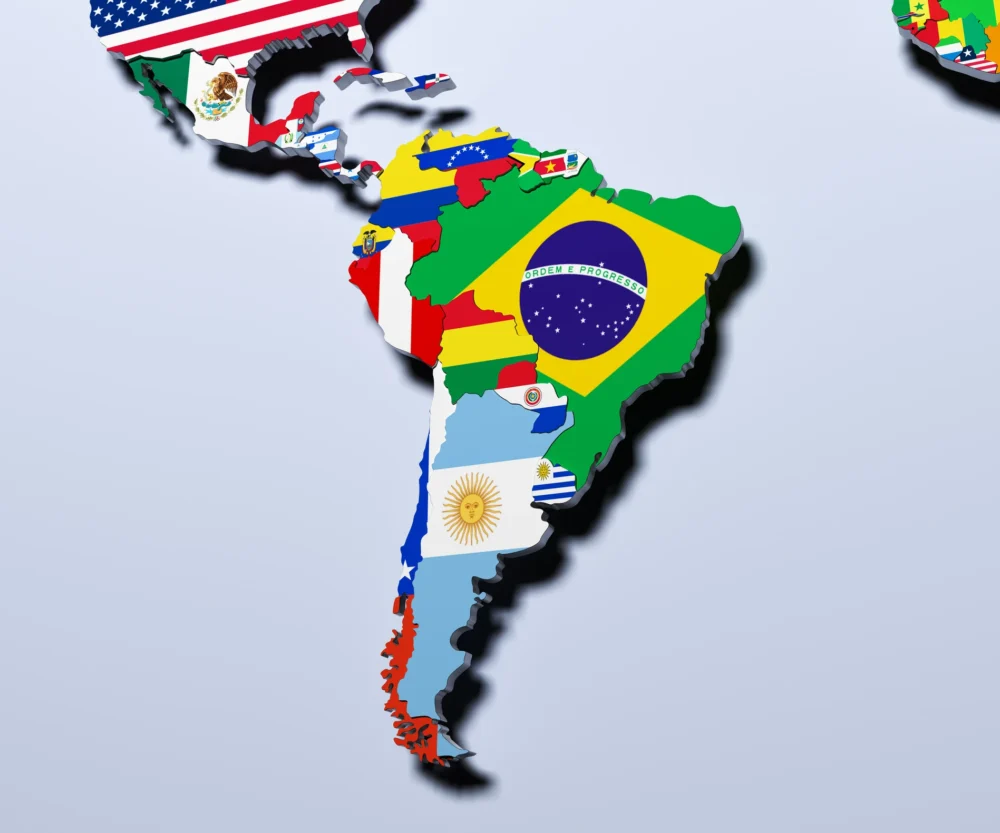
Chinese trade with Latin America has grown from just over $14B in 2000 to >$500B in 2024, overtaking the U.S. as South America’s top trading partner, although the U.S. still remains dominant in Mexico, Central America and the Caribbean.
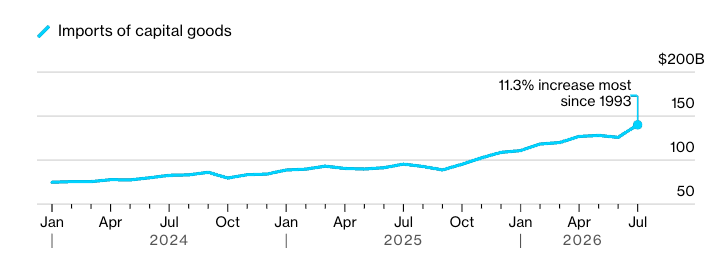
U.S. merchandise imports climbed 3.7%, fueled by the largest increase in capital goods since 1993. Capital goods include computers and accessories, semiconductors, and telecommunications equipment.
Source: Commerce Department, Bloomberg.
Leyes y legislación

On July 13th, 2026, the Indian Government updated its Foreign Trade Policy to prohibit the import of goods made wholly or partly with forced labor. Effective August 12th, 2026, companies trading via India will be required to conduct greater scrutiny of supply chains, sourcing, and due diligence.

The Kenya Revenue Authority (KRA) implemented a new Advance Cargo Declaration (ACD) platform for all containerized cargo destined for Kenyan ports, effective August 3rd, 2026. Under this new regulatory requirement, an ACD Reference Code must be obtained prior to shipment loading and endorsed on the Bill of Lading (BoL).



U.S. Customs & Border Protection is cracking down on federal cabotage laws: drivers from Mexico/Canada can enter the U.S. to transport cross-border freight, but they violate federal law if they stay to haul domestic loads, displacing work that would otherwise go to American truckers.
250 fewer Mexican carriers are operating in U.S. commercial zones along the southern border as federal cabotage enforcement has barred hundreds of Mexican truckers from crossing.
Laws & Legislation (continued)
The Trump Administration imposed 100% tariffs on certain unmanned aircraft systems (UAS), commonly known as drones, and their components due to their potential as a national security threat.
- The duties take effect September 3rd and will apply to drones with a maximum takeoff weight of >55 pounds, as well as systems with thermal imaging capabilities.
- A 25% tariff will be imposed on smaller drones and components without defense capabilities.
Drones imported from key U.S. allies—the UK, EU members, Japan, South Korea, Switzerland and Taiwan—will be charged a reduced 10-15% rate if the drones’ hardware and software meet certain criteria.

The U.S. government has overhauled the rules for its Title XI ship and shipyard financing program, trimming them significantly.
- The U.S. Maritime Administration (MARAD) wants to simplify a program used to guarantee debt for U.S.-flag ships that are constructed, reconstructed, repaired or reconditioned at American yards.
- MARAD also changed the way foreign components are handled: projects can now continue through processing and approval while a waiver covering foreign-sourced equipment remains outstanding. Major foreign components forming part of a vessel’s hull or superstructure still remain outside the waiver regime.

Infraestructura

Louisiana Investments Reshape Gulf Coast Trade
The Louisiana International Terminal (LIT) is poised to reshape Louisiana’s role in global trade and strengthen its port and logistics ecosystem. The terminal will significantly expand port capacity and modernize regional logistics infrastructure, connecting key inland markets via road, rail, and river systems.
The U.S. Army Corps of Engineers recently approved the construction permit for the Louisiana International Terminal (LIT). The LIT project is one of the largest federal investments in a U.S. container terminal to date.
Located in St. Bernard Parish, 16 miles down the Mississippi River from the current port in New Orleans, the new terminal will not have the air-draft limits of the current port. With a 55’ depth, the LIT is designed to berth two neo-Panamax container ships, each with up to 16,000 TEUs of capacity, and will be able to handle 2 million TEUs annually at full capacity.
The newly proposed St. Bernard Transportation Corridor would create an elevated roadway that connects the 400-acre terminal in Violet, Louisiana, directly to Interstate 510. Designed to facilitate efficient container movement and ease local congestion.


The Port of Klaipėda (Lithuania) is starting the largest expansion project in its history. The expanded southern port will significantly increase the port operations and cargo handling capabilities. The port is also implementing Portchain Quay to digitalize its berth planning processes. The platform is designed to bring berth, cranes, and gang planning into a single operational view.

Brazilian freight operator MRS Logistics has invested Reais $2B ($USD 364M) to expand rail capacity at the port of Santos, adding 40km of new track.
Fusiones y adquisiciones
Delta and Aeroméxico won a legal fight to preserve their transborder joint venture (JV) after an appeals court overturned a U.S. government order that would’ve disbanded the JV by Jan. 1 of next year.

After a lengthy delay, Argentina finally launched the privatization plan for the country’s rail freight operator, Belgrano Freight & Logistics (BCYL). The contract covers 7594km of freight lines across 16 provinces, and the tender has a 50-year operating concession.
The winning bidder(s) will maintain and upgrade the infrastructure while charging access fees to operators. The owners will also be able to sell state-owned locomotives and wagons.
Sostenibilidad
The EU’s new Packaging & Packaging Waste Regulation (PPWR) will establish rules throughout the EU and require retail businesses to use more sustainable packaging standards. Different aspects of the PPWR regulation will be phased in over time.
- All packaging must be recyclable by 2030
- Harmonizes packaging standards across EU countries, reducing fragmentation
- Reduce PFAS “forever chemicals”
- From 2028, there will be a harmonized labelling system for packaging to facilitate waste sorting and improve the efficiency of recycling.

Sustainability (continued)
A new government partnership, the British Columbia to Baja California ZEV Corridor (BC2BC), will test battery-electric and hydrogen fuel cell trucks along a West Coast corridor. California, British Columbia, Oregon, Washington, and Baja California are coordinating technical standards, infrastructure planning, and other requirements so that trucks can use charging and fueling infrastructure across jurisdictions.
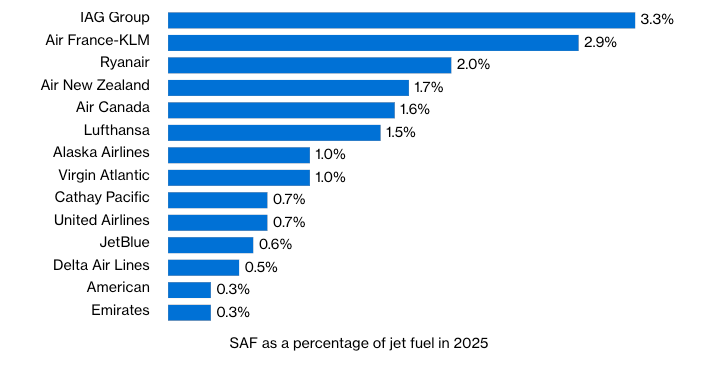
European Airlines Expand Lead on Cleaner Fuels
Despite progress in SAF consumption, the global shift to cleaner jet fuel is slower than expected, with SAF accounting for just 0.6% of jet fuel worldwide last year and expected to rise to only 0.8% this year.
Note: Ryanair’s figure is for its FY’26, which ended in March. Source: Company reports and interviews.
Tecnología del transporte
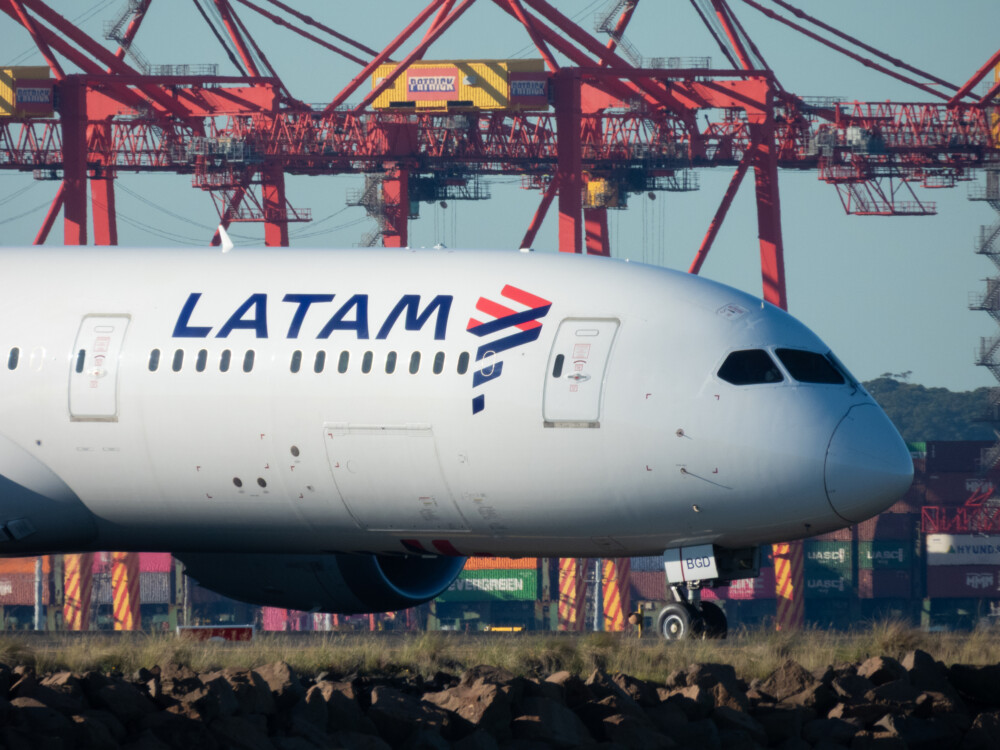
LATAM Cargo is the first airline in the Americas to integrate the International Air Transportation Association’s (IATA) AutoCheck solution for dangerous goods management directly into its core system to eliminate manual processes, shorten cargo acceptance times, and improve safety overall.
The digital tool automatically verifies if a shipper’s Declaration for Dangerous Goods (DGD) fully complies with IATA regulations while also guiding cargo acceptance agents through an interactive checklist, ensuring a standardized physical inspection of packaging and classification, reducing the risk of omissions, and optimizing specialists’ review time.
Transport Technology (continued)
U.S. Working to Make Nuclear-Powered Vessels Commercially Viable
The U.S. Department of Transportation’s Maritime Administration (MARAD) is working to make nuclear-powered merchant ships commercially viable. The U.S. wants to build a complete commercial ecosystem for Small Modular Nuclear Reactors (SMR) within commercial shipping and is actively soliciting information about the regulatory, shipyard, insurance, and port frameworks needed to make it happen.
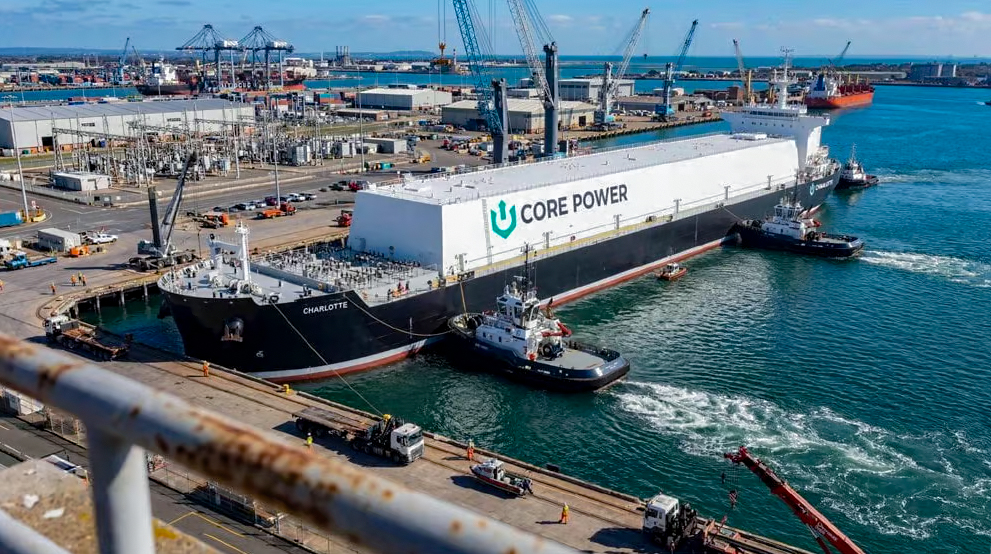
- The U.S. government signed a public/private agreement with Core Power to accelerate development of nuclear propulsion for shipping. The agreements will design a regulatory framework that enables speedy licensing, availability of insurance, port access, and high standards of safety.
- The collaborators want to build a fleet of 50 nuclear-powered merchant vessels—a mix of LNG tankers and container ships.
The ports of Long Beach (CA) and Corpus Christi (TX) have established testing areas and frameworks for exploring nuclear-powered vessels and shoreside applications.
- The Port of Long Beach has become the first U.S. seaport to formalize a partnership with MARAD and test SMRs for commercial vessels and other potential uses. The Coast Guard, the Department of Energy and the Nuclear Regulatory Commission will collaborate to define operational protocols, safety standards and inspection processes needed to support the safe arrival and servicing of SMR-powered vessels at U.S. ports, as well as to develop and share other best practices.
- Corpus Christi offers a different operating environment: the Texas port is the nation’s largest petroleum export port and a major LNG gateway, making it a good location for studying how advanced nuclear power could support energy-intensive port and industrial operations.
Contenidos relacionados
-
Actualizaciones sobre la cadena de suministro en Oriente Medio
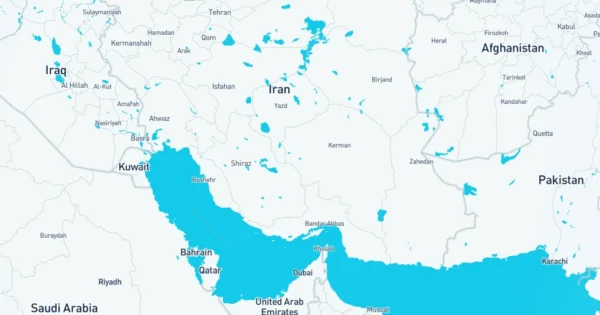
The situation in the Persian Gulf remains fluid, and this page will be updated as new developments occur.
-

Informe mensual sobre el mercado
Estos documentos informativos y completos destacan noticias y eventos críticos de la cadena de suministro, con información procedente de las principales fuentes del sector.
-

Noticias
Company news, blog posts, market reports, and much more.