Saisis ton numéro d'envoi.

Mises à jour tarifaires
Rates, country designations, and trade rules are all subject to change.
8 September 2026
Recent Developments

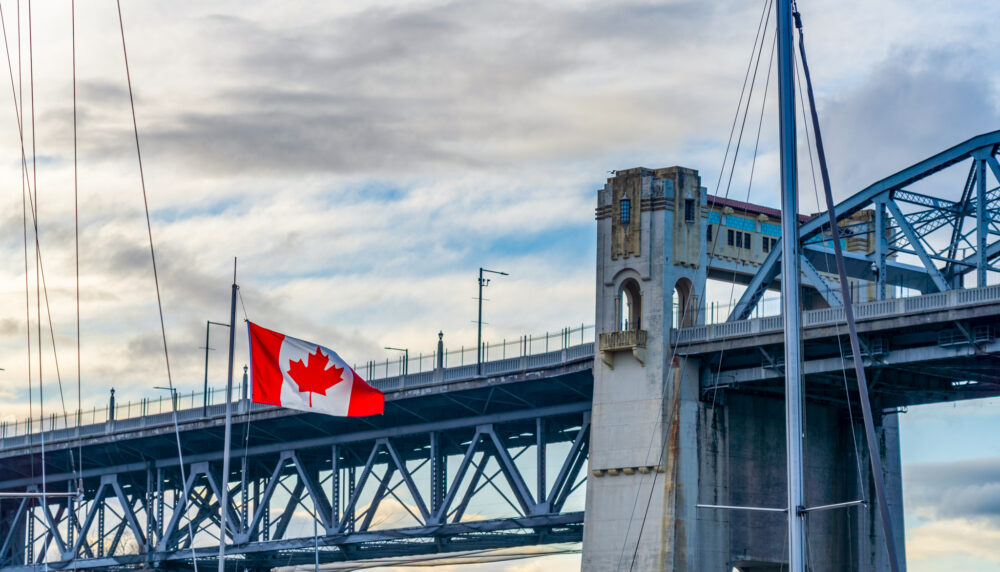
U.S. & Canada Engage in Escalating Trade War
Following a 3-day extension of negotiations, the Trump Administration decided to target Canadian products in several ways:
- Additional 50% tariff on certain Canadian goods
- Does not stack with Section 232 tariffs
- Does not apply to goods claiming chapter 98 duty-free treatment (except for the value of repairs, alterations, assembly)
- No exclusion for goods covered under the US-Mexico-Canada (USMCA) agreement
- Goods going into Foreign Trade Zones (FTZ) must be admitted as “privileged foreign status”
Canadian Countermeasures
Canada retaliated with counter-tariffs ranging from 15% to 50%, which took effect 12:01 a.m., September 8th, 2026.
- Goods in transit on September 8th are exempt; remission remains available
- 25% auto counter-tariffs remain
- Tiered 15%, 25%, and 50% surtaxes across 600+ items: steel, aluminum, dairy, appliances, ag equipment, pulp and paper, electronics, furniture and apparel.
The U.S. released additional proclamations hours after Canada’s counter-tariffs took effect—two of them modify the scope of the 50% tariff lists. Outright import bans on certain Canadian goods are scheduled for Sept. 29th via Section 338.
U.S. Customs Updates Post Summary Corrections (PSC) Procedures
Effective Aug. 5th, 2026
Post Summary Correction (PSC) procedures can affect duty corrections, valuation updates, classification changes, and compliance workflows. This is important for customs brokers and importers because PSCs are the primary mechanism for correcting entry summaries after filing but before liquidation.
- Updated eligibility rules for when a PSC can be filed.
- Changes to how PSCs interact with protests, liquidations, and other post-entry actions.
- Expanded validation and automation within ACE.
- New processing logic intended to improve accuracy and reduce conflicting post-entry filings.

Section 301: Forced Labor Tariffs
July 23rd, 2026
The United States Trade Representative (USTR) will enact a 10-12.5% ad valorem duty rate on 60 countries for their failure to stop goods from being produced and/or shipped using forced labor. A country-by-country list can be found here.
- The new levies counter the expiration of a temporary 10% global tariff under Section 122, which was installed after the Supreme Court rejected duties previously imposed under the International Emergency Economic Powers Act (IEEPA).
- For countries with Most-Favored Nation (MFN) rates, such as the EU, Japan and South Korea, the tariff charged will be net of the MFN duty.


Section 301: Brazilian Goods
July 22nd, 2026
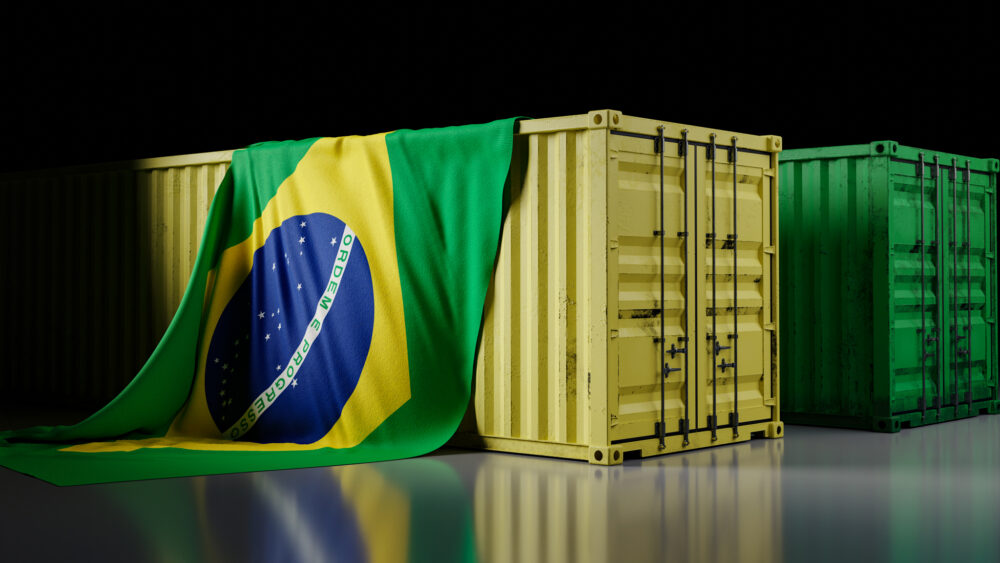
Following a yearlong Section 301 investigation by the Office of the U.S. Trade Representative (USTR), the U.S. imposed a new 25% tariff on most Brazilian imports, citing unfair digital trade and environmental policies.
- Key exemptions: beef, coffee, crude oil, orange juice, and civil aircraft parts. Roughly half of all Brazilian goods are exempt from the 25% levy to prevent major supply chain shocks.
- Key inclusions: ethanol, sugar, machinery, and footwear.
Brazil responded by requesting World Trade Organization (WTO) consultations and signing a credit line for affected firms.
Aug. 13th, 2026
A U.S. trade court rejected a challenge to President Donald Trump’s suspension of the de minimis exemption for low-value parcels, solidifying the law long-term.
Aug. 4th, 2026
So far the Trump Administration has paid out roughly 60% ($100b / $165b) of the money collected from the president’s “liberation day” tariffs.
July 23rd, 2026
The United States Trade Representative (USTR) enacted a 10-12.5% ad valorem duty rate on 60 countries for their failure to stop goods from being produced and/or shipped using forced labor. A country-by-country list can be found here.
- This action compensates for the administration’s 10% global tariff, invoked under Section 122 of the Trade Act of 1974, which was set to expire July 24th. These Section 122 tariffs were enacted following the Supreme Court’s invalidation of IEEPA tariffs.
July 7th, 2026
U.S. CBP officially launched CAPE Phase 2, expanding refund eligibility to include certain reconciliation-flagged entries. Importers with eligible entries that were previously excluded should review their records, as additional refunds may now be available. There is still no mechanism for entries that have already liquidated and are beyond the 80-day Phase 1 filing deadline.
June 1st, 2026
The U.S. made temporary adjustments to Section 232 tariffs on steel, aluminum and copper imports, targeting specific types of agricultural and industrial goods. The changes will stay in effect until Dec. 31st, 2027.
- Agricultural equipment (combines, harvesters, etc.) reduced to 15% tariff rate (previously 25%)
- Aluminum lithographic plates and steel racks added to the list of derivative products that qualify for the 25% tariff rate. ,
International Emergency Economic Powers Act (IEEPA)
Aug. 4th, 2026
So far the Trump Administration has paid out roughly 60% ($100b / $165b) of the money collected from the president’s “liberation day” tariffs.
IEEPA Tariff Refunds: ACH Support Available
Importers must ensure their ACH refund accounts are properly configured with CBP. If you have not yet established or confirmed your ACH refund setup, we strongly recommend doing so. Filing a protest:
- Préserve tes droits au remboursement
- Te protège si le CBP demande des protestations dans le cadre du processus de remboursement.
- Garantit que ta réclamation reste active pendant toute la durée du litige.
Si tu ne fais pas de réclamation dans les 180 jours suivant la date de liquidation, tu risques de ne pas pouvoir récupérer les droits que tu as payés. Pour en savoir plus sur le processus de liquidation, cliquez ici.
OIA Global t'aider de plusieurs façons :
- Vérifie tes données d'entrée pour repérer les envois concernés par l'IEEPA.
- Garde un œil sur les dates de liquidation pour être sûr de respecter les délais.
- Préparer et déposer des contestations pour toi
- Envoyez vos contestations par lots pour gagner du temps.
- Discute avec ton avocat (si besoin).
Consolidated Administration & Processing of Entries (CAPE) System
CAPE Phase 2
July 7th, 2026: CBP officially launched Phase 2 of the CAPE rollout, expanding refund eligibility to include certain reconciliation-flagged entries. Importers with eligible entries that were previously excluded should review their records, as additional refunds may now be available. There is still no mechanism for entries that have already liquidated and are beyond the 80-day Phase 1 filing deadline.
CAPE Phase 1
April 20th, 2026: Phase 1 of the Consolidated Administration & Processing of Entries (CAPE) system went live via U.S. Customs & Border Protection’s (CBP) ACE Portal. Although still limited in scope, CAPE does allow importers to reclaim IEEPA duties and interest. Importers should continue to monitor entry liquidation statuses, as the liquidation date is the deciding factor for use of the CAPE system.
Section 232 des tarifs douaniers
Section 232 Metals
Key Changes (Effective April 6th, 2026, 12:01 a.m. ET)
Tariffs will now be assessed based on the full value of imported goods—not reduced foreign pricing.
- 50% tariff: Articles made entirely or almost entirely of steel, aluminum, or copper (e.g., coils, sheets).
- 25% tariff: Derivative products substantially made of these metals.
- 15% tariff (through 2027): Certain metal-intensive industrial and electrical grid equipment to support U.S. industrial expansion.
- 10% tariff: Products manufactured abroad using entirely U.S.-origin metals.
Exemption: Goods containing 15% or less of these metals are no longer subject to Section 232 tariffs.
June 1, 2026: The U.S. made temporary adjustments to Section 232 tariffs on steel, aluminum, and copper imports, targeting specific types of agricultural and industrial goods.
- Agricultural equipment (combines, harvesters, etc.) reduced to 15% tariff rate (previously 25%)
- Aluminum lithographic plates and steel racks have been added to the list of derivative products that qualify for the 25% tariff rate.
The changes will stay in effect until Dec. 31st, 2027.
Implementation Guidance
Implementation guidance related to the June 1st, 2026 Presidential Proclamation further adjusting Section 232 tariffs on aluminum, steel, copper, and derivative products. Importers should review affected products, evaluate eligibility under the new provisions, and ensure documentation supporting country-of-origin, melt-and-pour, and smelt-and-cast requirements remains current.
Additional Products Added
Effective June 8th, 2026, several new HTS classifications were added to the scope of Section 232 duties, including certain lithographic printing plates and metal furniture products.
85% U.S.-Metal Content Threshold
CBP reduced the qualification threshold for products seeking preferential treatment based on U.S.-origin metal content. Beginning June 8, products must contain at least 85% U.S.-origin aluminum, steel, or copper, rather than the previous 95% threshold.
New HTSUS Provisions
New HTSUS Provisions (9903.82.20–9903.82.26): CBP introduced new tariff provisions covering certain derivative steel products, agricultural equipment parts, fixed industrial equipment, and mobile industrial equipment. These provisions establish revised duty treatments and reporting requirements for qualifying imports.
USMCA Steel Derivative Treatment
Certain steel derivative products from Canada and Mexico that qualify under the United States-Mexico-Canada Agreement (USMCA) may benefit from a partial duty exemption. Under the new framework, qualifying U.S. content may receive duty-free treatment, while non-U.S. content remains subject to Section 232 duties.
Copper Reporting Requirements
CBP has announced that additional reporting requirements related to the country of copper smelt and cast will be implemented in ACE at a future date. Importers should monitor CBP guidance for implementation timelines and filing instructions.
Section 232 Pharmaceuticals
100% tariff on patented pharmaceutical products and ingredients. Effective in 120 days for large companies (July 31st, 2026) and 180 days for smaller companies (September 29th, 2026).






Reduced tariffs (15%) apply for certain places: EU, Japan, Korea, Switzerland, Liechtenstein, and the United Kingdom (per recent agreement).
0% tariff available through Jan. 20th, 2029, for companies entering Most Favored Nation (MFN) pricing agreements with the U.S. Department of Health and Human Services, and onshoring agreements with the Department of Commerce. 20% tariff applies if only onshoring agreements are executed.

De Minimis Exemption for Low-Value Parcels
In an Aug. 13th decision, a U.S. trade court rejected a challenge to President Donald Trump’s suspension of de minimis, solidifying the law long-term.
July 30th 2025, Executive Order: The U.S. suspended the duty-free de minimis classification for all countries, which applied to parcels valued <$800. The order took effect on August 29th, 2025.
- Toute marchandise expédiée par le biais du réseau postal international sera soumise à des taux tarifaires basés sur la valeur du colis et son pays d'origine.

History: Executive Orders & Regulations
March 4th, 2026: the U.S. Court of International Trade ordered U.S. Customs and Border Protection (CBP) to liquidate certain unliquidated entries without applying IEEPA duties and to reliquidate entries that are not yet final, potentially paving the way for refunds.
March 6th, 2026: CBP informed the court it is not yet ready to process refunds but expects it could develop the necessary functionality in the Automated Commercial Environment (ACE) within approximately 45 days. The anticipated process may require importers to identify affected entries, after which ACE would validate them, recalculate duties without IEEPA tariffs, and aggregate potential refunds and interest before payments are issued by the U.S. Treasury.
Supreme Court Rejects IEEPA Tariffs
February 20th, 2026: Following a key Supreme Court decision that invalidated tariffs under the International Emergency Economic Powers Act (IEEPA), the Trump Administration implemented a new 10% global tariff under Section 122 of the 1974 Trade Act. This is a new tariff under a different legal authority and is not automatically affected by the Court’s ruling on IEEPA. Other tariffs under sections 301 and 232 remain unaffected.

Feb. 3rd, 2026: The U.S. and India signed a trade deal, reducing India’s tariff rate from 25% to 18%.

October 30th, 2025: the U.S. agreed to delay imposing higher tariffs on China for another year. As part of a consensus agreement, the U.S. lowered tariffs on imports from China to 10%, down from 20%. A variety of Section 301 and Section 232 tariffs remain in place, and goods from China will still face a duty burden of roughly 47%, according to U.S. Trade Representative Jamieson Greer.
August 7th, 2025: the U.S. enacted sweeping reciprocal tariffs on imports from 60+ countries, with duties ranging from 10% to over 100%, depending on origin and sector. Additions like sector-specific penalties and anti-transshipment provisions further complicate the trade landscape. The impact on landed costs, sourcing strategies, and compliance protocols will be significant.
- Le Mexique a obtenu un sursis, et ses taux actuels ont été prolongés de 90 jours.
- L'UE a retardé ses contre-mesures de 6 mois.
- Dans un décret, les États-Unis ont imposé des droits de douane supplémentaires de 25 % sur les produits indiens, à compter du 27 août 2025.
- Les États-Unis appliqueront des droits de douane de 50 % à la plupart des produits brésiliens, dans le cadre du décret exécutif : Addressing Threats to the United States by the Government of Brazil.
Les négociations commerciales avancent vite ! Tout le monde dans la chaîne d'approvisionnement devrait savoir que ces lois, qui ont un gros impact, vont changer souvent et de manière importante.OIA Global publie des avis, y compris des mises à jour sur les derniers développements tarifaires. On vous encourage à ajouter certaines de ces ressources utiles à vos favoris pour pouvoir les consulter plus tard.
Ressources clés

Foire aux questions (FAQ)
1. Dois-je agir maintenant ?
Oui. Beaucoup de ces tarifs sont déjà en vigueur. Si tu importes des marchandises aux États-Unis, tes coûts et tes exigences en matière de documentation peuvent avoir changé.
2. Puis-je changer de fournisseur pour éviter les tarifs ?
Dans de nombreux cas, oui. L'OIA peut t'aider à explorer les options d'approvisionnement dans les pays ou régions où les droits de douane sont moins élevés.
3. Existe-t-il des moyens de récupérer ou de réduire les tarifs ?
Certaines stratégies d'atténuation peuvent être disponibles, mais certains tarifs - en particulier dans le cadre de l'IEEPA - ne permettent pas le remboursement des droits de douane. En fonction de tes produits et de tes voies commerciales, nous t'aiderons à déterminer ce qui est possible.
4. Cela affectera-t-il mes délais de livraison ?
Éventuellement . Bien que les délais de transport soient stables, le dédouanement peut prendre plus de temps en raison des exigences d'entrée et des examens plus complexes.
5. Ces tarifs changeront-ils à nouveau ?
Oui. Il s'agit d'une situation permanente. Les tarifs et les règles sont susceptibles d'être modifiés sans préavis.
6. Où puis-je obtenir plus d'informations ?
Consulte le site https://www.oiaglobal.com/news/advisories pour obtenir les dernières mises à jour. Ou bien, contacte ton représentant de OIA Global pour naviguer ensemble dans la situation.
Comment cela t'affecte
Répercussions sur les coûts : Les tarifs douaniers peuvent augmenter de façon significative le coût total au débarquement de tes produits, ce qui affecte la marge et les modèles de tarification.
Changements dans la chaîne d'approvisionnement : Il se peut que tu doives reconsidérer l'endroit où tu t'approvisionnes en produits ou en matériaux pour éviter les tarifs excessifs.
Complexité douanière : Des documents, des déclarations et des étapes de conformité supplémentaires peuvent être nécessaires pour le traitement de l'entrée.
Comment l'OIA peut aider
Approvisionnement alternatif : Profite de notre réseau mondial pour explorer les options de fournisseurs dans les pays où les droits de douane sont faibles ou nuls.
Soutien à la conformité : Les spécialistes des douanes de l'OIA peuvent aider à l'examen de la classification, à l'éligibilité aux exclusions et à la conformité réglementaire.
Planification stratégique : Nous travaillerons avec toi sur des stratégies proactives pour atténuer l'impact financier et opérationnel des tarifs actuels et futurs.
Consultations : Nous t'aiderons à évaluer l'impact des tarifs douaniers sur l'ensemble de ta chaîne d'approvisionnement et à identifier les zones à risque.

Contenu connexe
-

Élimination de minimus et solutions omnicanales de l'OIA
Les fournisseurs de services logistiques basés aux États-Unis comme l'OIA sont bien placés pour aider les détaillants internationaux à délocaliser dans le contexte de l'élimination de la règle de minimis.
-
Zones de commerce extérieur et entrepôts sous douane : Qu'est-ce qui te convient ?
Les deux proposent des stratégies d'atténuation des droits de douane aux expéditeurs qui importent des marchandises aux États-Unis, mais il existe des différences essentielles entre les deux...
-

Naviguer dans les tarifs douaniers : Stratégies pour assurer le bon fonctionnement de ta chaîne d'approvisionnement
Les nouveaux tarifs douaniers perturbent les chaînes d'approvisionnement mondiales, mais l'OIA aide les entreprises à s'adapter grâce à des solutions innovantes en matière de logistique, d'emballage et d'approvisionnement.