Nhập số lô hàng của bạn.

AI Prompt Playbook: Electronics & Technology
35+ ready-to-use AI prompts for semiconductor, consumer electronics, and hardware companies—covering component shortages, high-value logistics, cross-border compliance, and launch operations.

Điện tử

Thiết bị gia dụng & Thiết bị cá nhân

Chất bán dẫn và vi mạch

Tiền điện tử và khai thác dữ liệu

Viễn thông & Điện toán đám mây
How to Use This Guide
AI is only as useful as the information you give it. Every prompt works better with more context (allocation status, launch dates, current freight rates, etc.)
- Copy any prompt directly into an AI platform (Claude, ChatGPT, Microsoft Copilot, etc)
- Replace the text in [brackets] with your specifics.

Included in This Guide
- Component & Semiconductor Strategy
- Shortage response protocol
- BOM risk assessment
- Product Launch Logistics
- Tuân thủ quy định
- Direct-to-consumer (DTC) ecommerce
- Import customs checklist
- Logistics ngược

Component & Semiconductor Strategy

Component & Semiconductor Strategy
Semiconductor Shortage Response Protocol
[I’m a supply chain manager at a consumer / industrial electronics company. A key component — [describe: MCU, power IC, display driver] — just went into allocation.]
Build a shortage response protocol I can activate immediately. Cover:
- Broker sourcing criteria and counterfeit risk mitigation steps
- BOM redesign / component substitution evaluation process — who needs to be in the room and what they need from me
- Customer allocation prioritization model — how to rank products and customers when supply is constrained
- Internal communication templates for sales and operations leadership
- Leading indicators I should monitor to predict the next allocation event for this component family
BOM Risk Assessment for New Product
I’m launching a new product with a BOM of approximately [X] unique components. Before we commit to production volume, I need to assess supply chain risk across the BOM.
Build a BOM risk assessment framework covering: how to classify components by supply risk (single-source, long lead time, allocation history, geopolitical exposure), the data inputs I need from engineering and procurement, how to prioritize which components to qualify alternates for first, and a scoring model I can use to present a risk-rated BOM to my VP of Hardware and CFO before we lock production plans.
Counterfeit Component Risk Mitigation
Approved Vendor List Rationalization
I manage an AVL with [X] approved component suppliers. Leadership wants me to rationalize the list to reduce compliance burden while improving resilience.
Build a framework for AVL rationalization: how to score and segment existing suppliers, criteria for removal vs. retention, how to ensure dual-source coverage on critical components, and a process for adding new suppliers efficiently without compromising qualification standards.
Reverse Logistics & Circularity
Electronics Returns & Refurbishment Program
I manage the supply chain for a [consumer electronics / enterprise hardware] company. Our return rate is [X%] and we currently liquidate or destroy most returns at a loss.
Design a reverse logistics and refurbishment program that: grades and routes returned units to highest-value recovery channels (refurb, certified-used, parts harvesting, recycler), estimates the revenue recovery potential vs. current liquidation approach, identifies 3PL partner capabilities required, and addresses data security requirements for returned devices.
Include a cost-benefit structure I can use to get budget approval for the program build-out.
Note: Electronics refurb programs routinely recover 3–5x more value per unit than liquidation—the math usually works.

High-Value & Time-Critical Logistics
High-Value & Time-Critical Logistics
Air vs. Ocean Decision Model
I need to decide whether to ship [X units] of [product: finished devices / PCBs / display panels] from [origin: Taiwan / South Korea / China] to [destination] by air or ocean.
Build a decision model that accounts for:
- Freight cost differential (ocean rate ~$[X]/CBM, air rate ~$[Y]/kg)
- Inventory carrying cost during transit ([X]-day ocean vs. [Y]-day air)
- Stockout cost if we miss our launch / replenishment window
- Product value density: $[X]/unit, [Y] units/pallet
- Launch date sensitivity: [hard date / soft date]
Show me the break-even calculation and identify which inputs most change the recommendation when they move ±20%.
Note: Add your actual rates and carrying cost % for a real calculation you can put in a budget request.
Product Launch
[I’m launching [product type] globally in [X weeks]. We’re shipping from [manufacturing country] to distribution points in North America, Europe, and APAC simultaneously.]
Build a launch logistics playbook covering:
- Pre-launch: carrier capacity booking timeline, DC receiving cutoffs, customs pre-clearance strategy
- Launch week: allocation and release sequencing, air charter decision criteria, real-time visibility requirements
- Post-launch: velocity monitoring triggers that should activate replenishment air shipments, returns logistics setup, and carrier performance review process
Include a RACI for the logistics team and a communications cadence for sales and finance.
Note: Global simultaneous launches are logistics-intensive—this playbook prevents the most common post-launch firefighting.
High-Value Cargo Security Protocol
I ship high-value electronics (average shipment value $[X]M) via air and ocean. We’ve had [one incident / a near-miss / increasing theft reports in our lanes].
Build a high-value cargo security protocol covering: carrier and facility vetting requirements, packaging and concealment best practices, routing and timing risk reduction, GPS tracking requirements, insurance coverage evaluation checklist, and a cargo theft incident response procedure. Include the specific questions I should ask any new logistics provider about their security capabilities.
Cross-Border & Regulatory Compliance
Cross-Border & Regulatory Compliance
I’m importing [consumer electronics / IoT devices / EV components / telecom equipment] into [US / EU / UK / Australia — pick your market] for the first time.
Build a complete import compliance checklist covering:
- Required product certifications for this market (FCC, IC, CE, UKCA, RCM, etc.)
- HTS classification considerations and duty rates
- Battery and lithium content declaration requirements
- WEEE / e-waste registration requirements (for EU)
- Customs examination risk factors for electronics
- Common compliance errors that result in CBP or customs detention
Flag any recent regulatory changes in the past 12 months that I should know about for my product category.
I’m launching cross-border DTC e-commerce for [electronics product] from [ship-from country] into [target markets: EU / UK / Canada / Australia / Southeast Asia].
Design a cross-border fulfillment strategy covering:
- De minimis threshold landscape by market and how to structure shipments accordingly
- VAT/GST registration triggers and IOSS (EU) / OSS considerations
- Duties and taxes at checkout options (DDP vs. DDU) and customer experience tradeoffs
- Lithium battery declaration requirements by mode for DTC shipments
- Returns logistics design for cross-border — the part most brands get wrong
Flag which market combinations can share a single DC location and which require local stocking.
Note: De minimis rules are actively changing in 2025–2026 — verify current thresholds before launching.
Về OIA Global
OIA Global là nhà cung cấp hàng đầu các giải pháp chuỗi cung ứng trọn gói, cung cấp dịch vụ logistics linh hoạt, thích ứng với một thế giới năng động. Sứ mệnh của công ty chúng tôi là mang lại sự an tâm. Thông qua các giải pháp đã được chứng minh và dịch vụ xuất sắc, OIA luôn nỗ lực hết mình để tìm ra con đường thành công cho mọi khách hàng.
Năng lực của OIA vượt xa quản lý vận tải truyền thống, bao gồm các dịch vụ toàn diện về đường bộ, đường biển và đường hàng không, cũng như logistics hợp đồng , logistics dự án và môi giới hải quan . Chúng tôi cũng cung cấp các giải pháp đóng gói tiên tiến, quản lý nguyên liệu thô và điều phối chuỗi cung ứng 4PL .
By integrating automation, innovation, and AI into daily operations, OIA transforms data into actionable intelligence, enabling smarter decision-making and providing customers with better visibility and agility. OIA maintains expertise in several key industries: automotive and mobility, electronics, energy, healthcare, industrial, and retail and lifestyle, but also provides services in many others. Founded and headquartered in Portland, Oregon, USA, the company now operates 60+ offices in 28 countries with more than 1,200 employees. For more information, connect with OIA on LinkedIn, Instagram, X, Facebook, or YouTube.

Nội dung liên quan
-

Justin Bowman Named Vice President, Global Head of Vertical Markets – Electronics
Leading OIA Global’s electronics vertical to drive growth and provide specialized supply chain solutions
-
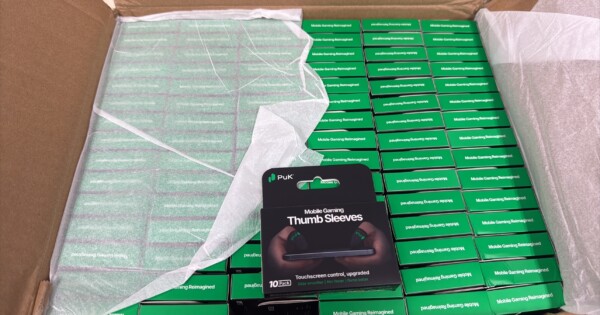
Giải pháp bán hàng trực tiếp cho người tiêu dùng của PuK Gaming
OIA created an end-to-end, direct-to-consumer supply chain solution for a mobile gaming company.
-

Giải pháp đa kênh của De Minimus Elimination & OIA
Các nhà cung cấp dịch vụ hậu cần có trụ sở tại Hoa Kỳ như OIA có vị thế tốt để hỗ trợ các nhà bán lẻ quốc tế hoạt động gần bờ trong bối cảnh loại bỏ các chi phí tối thiểu.