Saisis ton numéro d'envoi.

Market Report - 6/2026
Ces documents super complets et informatifs mettent en avant les infos et les événements importants de la chaîne d'approvisionnement, avec des infos provenant des meilleures sources du secteur.
OIA Global publie chaque mois un rapport complet sur le marché !
Sections de contenu
- Tendances du marché
- Fusions et acquisitions
- L'infrastructure
- Lois et législation
- Durabilité
- Technologie des transports
Tendances du marché
1/3 of all containers are now moved without cargo, a sharp deterioration from the ¼ seen before the COVID-19 pandemic. In practical terms, carriers are now moving double the volume of empty containers—measured by distance—compared with before the pandemic.
- Measured in TEU-miles, 30% of all global container shipping work now involves repositioning empty boxes, up from 24% pre-pandemic.
- The number of empty containers shipped has grown 65% since Q1 ’19, while the number of full containers has grown just 17% over the same period.
Global container demand expanded 3-5% year-over-year (YoY) during Q1 2026.


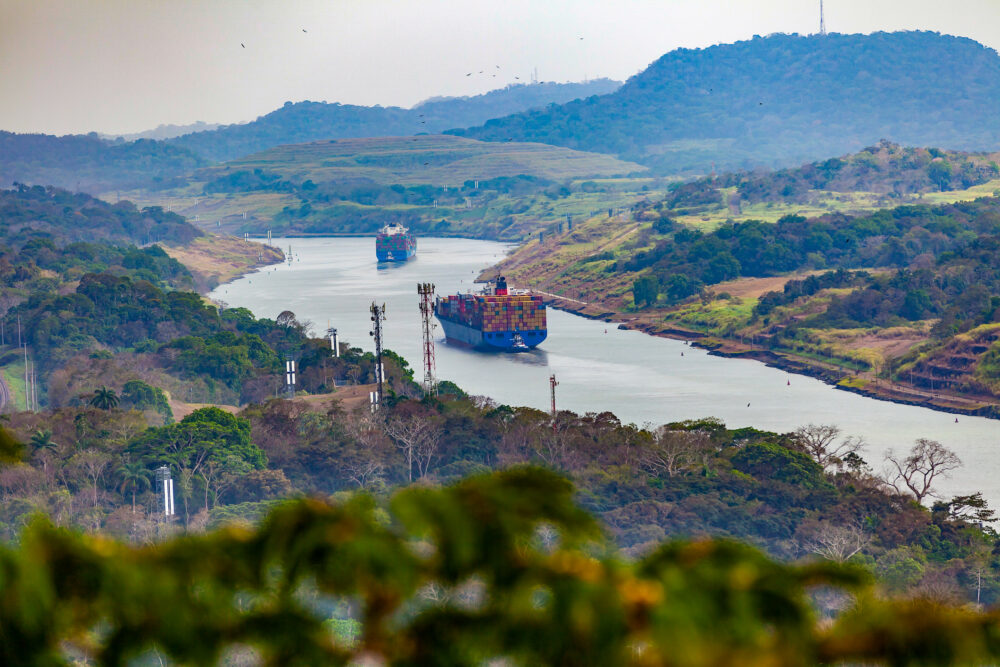
Auction prices for priority Panama Canal transit slots have climbed to an unprecedented $4M per vessel. These extraordinary fees, paid on top of standard canal tolls, demonstrate how the Panama Canal has become a key alternative for traditional energy and container flows as the Strait of Hormuz crisis continues to disrupt global trade.
What this means for customers: energy products and container flows are rerouting around the Middle East, affecting transit times and capacity throughout Southeast Asia and the Indian Subcontinent.
The world’s leading ocean carriers and their affiliates now own approximately 50% of worldwide terminal capacity, almost double that of 10 years ago.
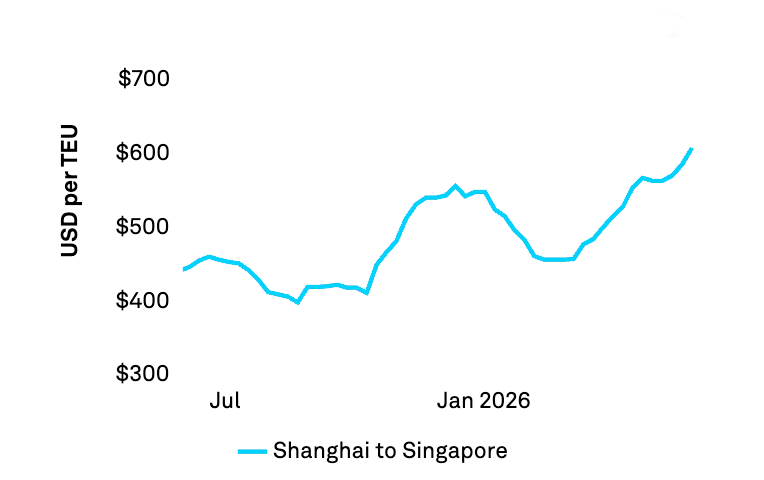
Intra-Asia trade rates continue to rise, as demonstrated by Shanghai-Singapore container spot rates. South Korea’s container trade was a notable outlier as it contracted for a third consecutive month in April.
Source: Shanghai Shipping Exchange, via JOC.
Drone delivery revenue will grow significantly over the next decade, from approximately $2.2B in 2026 to $25.3B by 2036.
- Within the delivery sector, the strongest use cases are in time-sensitive and high-value logistics rather than low-margin parcel delivery; for example, medical supplies, pharmacy deliveries, etc.
- Drones can shorten delivery times, avoid road infrastructure limitations, and improve service reliability in hard-to-reach areas.

Tendances du marché (suite)

April ‘26 import data (2.64M TEUs) shows that containerized freight imports bound for the U.S. declined for the 12th consecutive month (-5.2%).

China’s Transport Ministry is targeting ocean transport rate data to protect shippers from unclear pricing strategies. The enhanced scrutiny will likely raise costs for forwarders and carriers as they devote more resources to ensure compliance with rate filing procedures.

Australia has secured the first vessel for its long-awaited maritime strategic fleet program, the ANL Kokoda. Overall, the strategic fleet will comprise 12 privately owned and commercially operated Australian flagged and crewed vessels, which will remain available for the government in times of need (war, blockade, etc.).

The European Union unveiled a “tech sovereignty” plan to expand its domestic technology supply chain and reduce dependence on the U.S. and Asia in key areas: semiconductors, artificial intelligence, cloud computing, etc.
Lois et législation
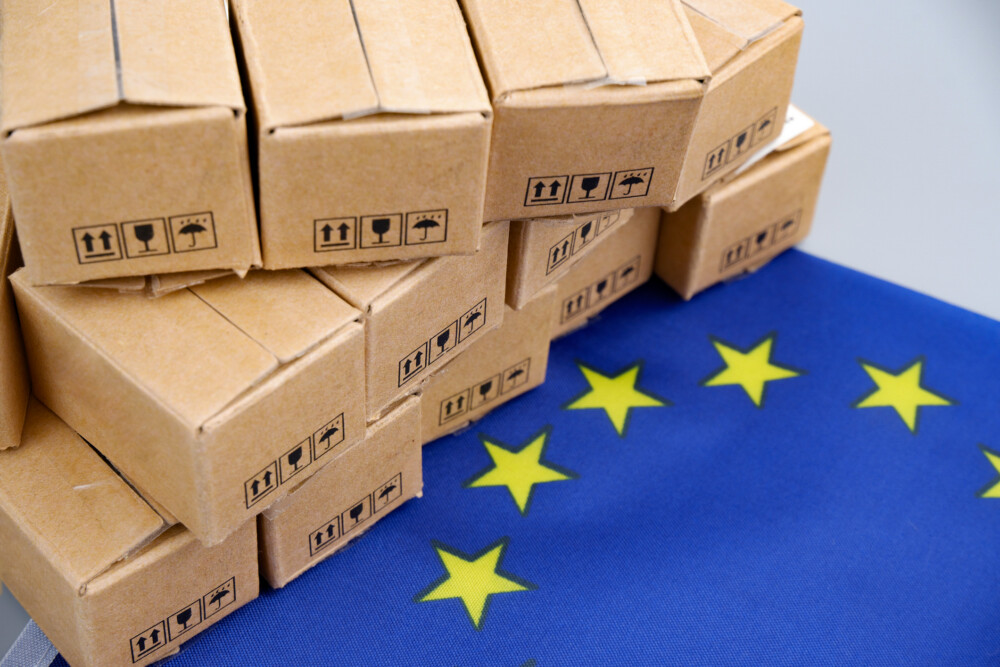
Starting July 1st, 2026, the EU will introduce significant changes to its E-commerce customs rules, removing the duty-free threshold for low-value goods.
For parcels valued at €150 or less, a flat €3 duty will apply per item within a shipment. If a package contains multiple items from different product categories, the duty applies to each distinct category.
What this means for customers: high-volume, low-value shippers will see an immediate impact on their duty bills. OIA offers customs brokerage consultations to help shippers navigate the EU’s complex regulatory environment.
A recent executive order intends to strengthen U.S. Customs and Border Protection (CBP) in several strategic ways, with a focus on the importer of record (IOR):
- Identify insufficient customs bond requirements to prevent misclassification or undervaluation
- The U.S. Department of Justice (DOJ) has established a Trade Fraud Task Force to address transshipment maneuvers used to mask the true origin of goods.
- Target importers’ use of shell companies
What this means for customers: importers face enhanced scrutiny on bonds, valuation, and origin details. OIA’s customs brokerage team can help you solidify your documentation and remain compliant.

Lois et législation (suite)
The Office of the U.S. Trade Representative (USTR) proposed additional tariffs on imports from 60 countries because the goods were produced with forced labor. Underneath Section 301, USTR proposed a 10% duty rate for economies that have adopted a full or partial prohibition on forced labor trade, and 12.5% for all other economies.
USTR will hold hearings about the proposed actions on July 7th, 2026, which will determine the next steps.
The U.S. will impose countervailing duties on intermodal chassis and subassemblies imported from Mexico and Thailand. Antidumping duties will be imposed on both countries as well as Vietnam.
- The U.S. is accusing manufacturers in the three countries of selling their products below market prices and receiving anticompetitive government support.
The European Parliament is enacting new capacity management regulations throughout the European Union’s (EU) rail network. The new rules will factor in the digitalization of train operating systems and impact capacity management during planning, scheduling, allocation, and rescheduling. These changes are expected to unlock up to 4% of additional capacity—equivalent to nearly 250M train-kilometers—and to improve cross-border traffic flows.

As part of its 20th sanctions package against Russia, the EU has banned the sale (and future resale) by EU entities of any tankers to Russia. Western sanctions have now banned 632 vessels and 70 banks overall.
Durabilité

The United Kingdom’s Emissions Trading Scheme (UK ETS) will soon incorporate domestic maritime activities, effective July 1st, 2026.
- Voyages between UK ports (domestic voyages)
- 100% of emissions generated while vessels are in UK ports, including at berth and anchorage
Updated emission surcharge levels, including the impact of UK ETS, will be published quarterly (starting Q3 ‘26) and adjusted in line with market developments.
What this means for customers: there are now carbon costs associated with UK domestic voyages and time spent at UK ports. OIA can help identify the optimal routes and mode shifts to support.
Sustainability (continued)
Hapag-Lloyd and Kuehne+Nagel recently completed their first collaborative ocean freight project using waste-based Sustainable Marine Fuels (SMF). Approximately 3,000 tons of CO₂e emission reductions were agreed as part of a 2026 pilot program.
Hapag-Lloyd and Seaspan have completed the first vessel conversion under their joint methanol retrofit program. Each retrofit could reduce CO2e emissions by 30,000-50,000 metric tons per vessel annually.

The EU is considering extending its emissions trading system (ETS)—a complex carbon pricing scheme—to include flights departing from the bloc, which could cost major airlines (Lufthansa, British Airways, etc.) an additional €1.5b.
L'infrastructure
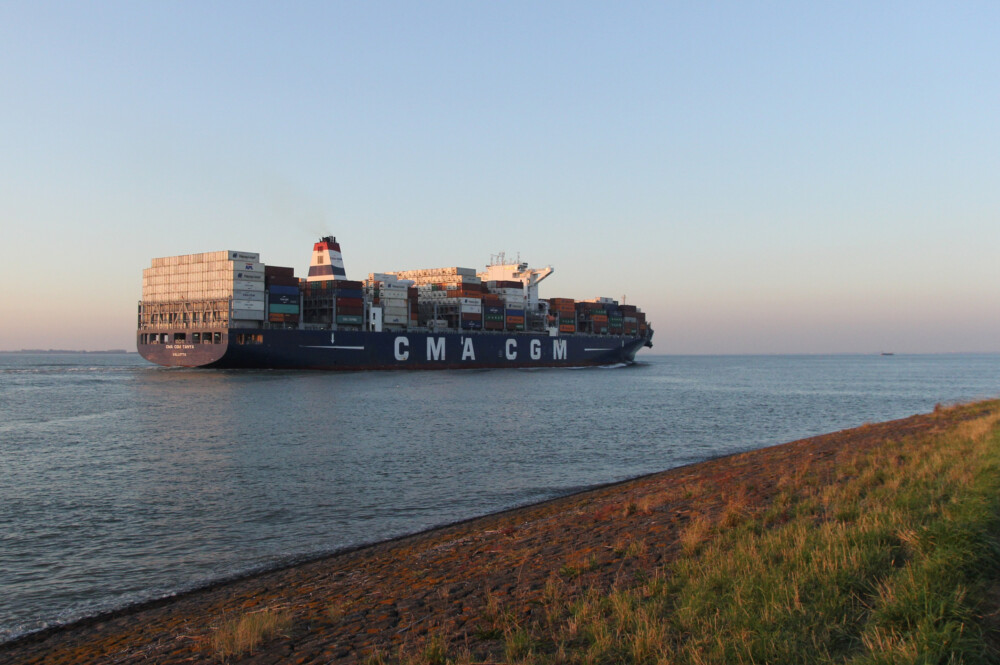
CMA CGM Expands Influence Throughout Africa
CMA CGM Group recently signed a cooperation framework with Kenya’s government to develop port and logistics infrastructure and strengthen freight flows. These investments are part of a wider strategy to develop interconnected maritime and inland logistics hubs across Africa.

Port of Mombasa in Kenya: $820M to modernize two terminals

The Lekki Deep Sea Port in Nigeria

Kribi Container Terminal in Cameroon: expansion works are underway to support rising sub-regional volumes.

Nador West Med terminal in Morocco

Pointe-Noire, Congo: a new deep-water terminal designed to support transshipment and regional trade flows.

Egypt: capacity expansion at Alexandria’s TMT terminal. In Sokhna, CMA is also involved in the Red Sea Container Terminal with COSCO Ports and Hutchison Ports, supporting multimodal port-rail connectivity
Infrastructure (continued)
Two key parts of the BUILD America 250 Act, the U.S. government’s massive federal surface transportation bill:
- $102B allocated to passenger and freight rail, the largest federal investment in rail since Amtrak’s creation.
- $44.7M per year specifically for aviation safety and cybersecurity at the Federal Aviation Administration (FAA).

Belfast unveiled a £1.3B expansion plan to close the gap with its lead rival, Dublin. Although Dublin is busier, it’s expected to reach maximum capacity by 2040, allowing Belfast to become the principal port on Ireland’s eastern seaboard. Trade volumes through Belfast Harbour could increase from around 24M tons today to >30M tons by 2050.
Work has begun on the fifth development phase of Nansha Port, the main international container gateway for Guangzhou, China. The $2B project should increase Nansha’s capacity to 35M TEUs (+6.7M TEUs) by around 2030. Projects include four berths capable of handling ships of >21,000 TEUs, plus 15 berths for regional feeder vessels, with a combined berth length of 2.4 miles.
Russia and China agreed to lay a second 1435mm-gauge rail track between Zabaikalsk in Russia and Manzhouli in China, increasing freight capacity at a key 12km cross-border line and enabling trains to operate to and from China simultaneously.
Technologie des transports

Malaysia is in a trial phase of automatic electronic ship reporting in the Malacca Strait, one of the world’s busiest waterways. The Mandatory Ship Reporting System in the Straits of Malacca & Singapore (STRAITREP) serves as an alternative to manual submissions by VHF radio channels, which have been used since 1998.
Transport Technology (continued)
U.S. Targets Trucking Fraud via New Registration System & Digital Portal
The Federal Motor Carrier Safety Administrator (FMCSA) is replacing its outdated motor carrier registration system to crackdown on fraudulent companies and “chameleon carriers” that have circumvented federal oversight. The new “Motus” tool uses biometrics and data analytics to ensure that applicants and the businesses they represent are legitimate, legal entities.
- The National Motor Freight Traffic Association (NMFTA) launched a new anonymous portal where people can submit cybersecurity and fraud threats, allowing companies to share information about incidents and suspicious activity and learn from each other.
The International Maritime Organization (IMO) has adopted the first global regulatory framework specifically designed for Maritime Autonomous Surface Ships, known as the MASS Code.
Note: The adoption is not a regulatory green light for fleets of unmanned vessels crossing oceans under the control of artificial intelligence.
U.S. Working to Make Nuclear-Powered Vessels Commercially Viable
The U.S. Maritime Administration (MARAD) has launched an initiative to make nuclear-powered merchant ships commercially viable. The U.S. wants to build a complete commercial ecosystem for Small Modular Nuclear Reactors (SMR) within commercial shipping, with a recent request for information inquiring about the regulatory, shipyard, insurance, and port frameworks needed to make it happen.
Fusions et acquisitions
Government Accepts Revised UP/NS Merger Application, but Still Requires More Information
The Surface Transportation Board (STB) accepted the refiled application but noted that it doesn’t meet completeness standards. The applicants—Union Pacific (UP) and Norfolk Southern (NS)—have until July 27th to submit more information.
The STB is demanding a facility-by-facility analysis and proposed remedies for shippers whose rail options will shrink from three to two or two to one. STB wants more information on who benefits, who is excluded, and whether the program generates net public gains.

Kpler secured an investment of >$1B from global investment firm Sixth Street. Founded in 2014, Kpler has grown from an LNG cargo-tracking specialist into one of the shipping industry’s most influential data providers, offering insights across energy, dry bulk, maritime transport, and defense markets. The vessel-tracking platform, MarineTraffic, is among the company’s brands.
Contenu connexe
-

Mises à jour tarifaires
Rates, country designations, and trade rules are all subject to change.
-
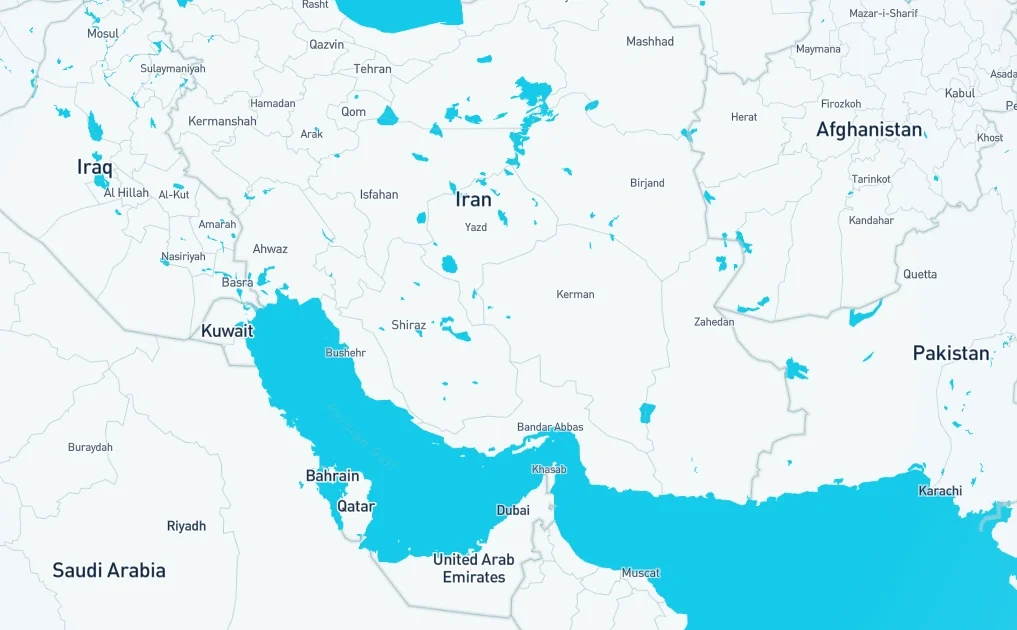
Mises à jour sur la chaîne d'approvisionnement au Moyen-Orient
The situation in the Persian Gulf remains fluid, and this page will be updated as new developments occur.
-

Rapport mensuel sur le marché
Ces documents super complets et informatifs mettent en avant les infos et les événements importants de la chaîne d'approvisionnement, avec des infos provenant des meilleures sources du secteur.